 In
the shade of overarching palm trees on an island of the Society group in
Polynesia, a white man and a native were talking. The former was a missionary,
the latter a heathen ruler. The white man and his fellow missionaries had
been repeatedly threatened with death. Three of them, in fact, had been killed.
Four others were one day assaulted, robbed, stripped and dragged into a stream
to be drowned. Managing to escape, they fled across the sea to a remote island,
accompanied by all the missionaries except one. This lonely but resolute
soul was Henry Nott. He had mastered the difficult Tahitian tongue and with
toils and tears had proclaimed his message for more than ten years, but as
yet he had not a single convert.
In
the shade of overarching palm trees on an island of the Society group in
Polynesia, a white man and a native were talking. The former was a missionary,
the latter a heathen ruler. The white man and his fellow missionaries had
been repeatedly threatened with death. Three of them, in fact, had been killed.
Four others were one day assaulted, robbed, stripped and dragged into a stream
to be drowned. Managing to escape, they fled across the sea to a remote island,
accompanied by all the missionaries except one. This lonely but resolute
soul was Henry Nott. He had mastered the difficult Tahitian tongue and with
toils and tears had proclaimed his message for more than ten years, but as
yet he had not a single convert.
Turning to the native king, Henry Nott said: "For the sake of your immortal soul and of your influence upon your subjects, I urge you, for the thousandth time, to turn to Christ. Do not longer reject His glorious salvation. Every human soul is of infinite value to Him."
"Doubtless you are right," replied the swarthy native, "but for one who has sinned so disgracefully and wallowed in the depths of heathen depravities, there is no hope."
"There is hope," rejoined the missionary. And to prove his point he quoted these seraphic syllables: "For God so loved the world, that he gave his only begotten Son, that whosoever believeth in him should not perish, but have everlasting life."
Martin Luther called John 3:16 "the little gospel." When, during his last illness, someone recommended to him a certain remedy for his severe headache, he declined with these words: "The best prescription for head and heart is to be found in John 3:16." And in his dying moments he repeated the text three times.
Said Henry Nott: "The only sure and efficacious remedy for the ignorance, the depravities, the sorrows and sins of mankind, is to be found in the gospel of John 3:16."
In appreciation of the sublimities of John 3:16, Martin Luther and Henry Nott were of much the same mind.
I. John 3:16 Is the Only Sure and Efficacious Remedy for the Ignorance of Mankind
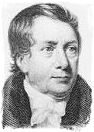
To establish a mission in Tahiti had as early as 1787 been the dream of William Carey, the consecrated cobbler, who in 1792 inspired the Baptists to organize the first Foreign Mission Society of modern times. Carey was led instead to India; and to Henry Nott, the consecrated brick-layer, goes much of the human credit for establishing a mission in Tahiti and throughout the Society Islands. He was born in Bromsgrove in 1774, and was a member of the first company of missionaries sent out by the newly organized London Missionary Society. They sailed on the Duff in September, 1796, and reached Tahiti March 5, 1797.
There were many evidences that the people were engrossed in strange and dark practices stemming from ignorance and superstition. It was amusing to see the young king, Otu, and his queen riding on men's shoulders. They were always carried about in this fashion, lest their feet should touch the ground or some other object, because whatever they touched became their own. The official report of the "First Missionary Voyage to the Southern Pacific," published in London in 1799, conveys much astonishing information, including the following:
The mode of carrying the king and queen is with their legs hanging down before, seated on the shoulders and leaning on the head of their carriers, and very frequently amusing themselves with picking out the vermin which there abound. It is the singular privilege of the queen that, of all women, she alone may eat the vermin, which privilege she never fails to make use of.
Several years prior to the arrival of the missionaries, two abandoned white men, dissolute sailors, had taken up their abode on the island. Their names were Peter and Andrew. Using these men as interpreters the missionaries explained to the king why they had come on such a long, perilous journey and inquired whether they would receive his protection in settling among the people. When the objects of the mission had been set forth, the king seemed greatly pleased. He forthwith gave the missionaries the largest house in Tahiti and ceded to them the district known as Matavai. As subsequent events made abundantly clear, the king welcomed the missionaries because he thought their presence would bring him prestige and a supply of Western tools, rather than because of a sympathetic identification with their spiritual aims. The king and the people were very generous in furnishing breadfruit, coconuts, hogs and other food for the missionaries, though they always expected generous compensation in the form of axes, hatchets and the like.
The most powerful man in Tahiti was Pomare. Because of his advanced age, he had given the title of king to his son, Otu, but he was still the real ruler. Pomare was a man of powerful physique and of aggressive, dominating personality. By dint of his ferocious courage, he had succeeded in bringing all of Tahiti under one ruler and had extended his sway over a number of other islands.
Pomare was very friendly with the missionaries and often came to see them. He always brought a voracious appetite and regularly stayed to eat. His favorite missionary friend, Henry Nott, watched him devour a quantity of vegetables and fruit, two chickens and two pounds of pork at one meal. One of his attendants always fed him; his dignity would not permit him to feed himself. The missionary was amused "to see so stout a man, perhaps the largest in the whole island, fed like a cuckoo."
One day Pomare and his wife, Iddeah, came for a visit, perched as usual on men's shoulders. Several of his attendants carried a large chest. When asked why he brought it, he smilingly replied, "To hold the presents you will be pleased to give me." He specifically asked for twenty axes, ten shirts, sixteen mirrors, twelve scissors, one hundred nails, ten combs, one cast iron pot, one razor and one blanket. When these had been given, he looked around and pointed out a number of other things he especially craved.
The natives were persistent in demanding presents. When the supplies of the missionaries ran low and they ceased to give out gifts with a lavish hand, they were robbed of things they desperately needed and which could not be replaced. Thievery was extremely common; in fact, it was a recognized part of the religion of the Tahitians. One of their gods, Hiro, was the protector of thieves. When they went out to steal, they promised Hiro part of the booty in exchange for his assistance.
The missionaries found a class of people called areois. They blackened their bodies with charcoal and dyed their faces red. They had no occupation but dancing, boxing, wrestling and indulging in acts of buffoonery. They made it a practice to kill their children as soon as they were born. Pomare's chief wife, Iddeah, was a member of this society and had killed three of her children subsequent to the arrival of the missionaries.
Soon after reaching Tahiti, Henry Nott and the missionary company conducted the first Christian service ever held on the shores of that dark island. It was Sunday, March 19, 1797. The meeting was held under cover of some enormous trees. The king and a vast concourse of people were present. Pomare said he had been "dreaming about the Book of God which the missionaries had brought" and was eager to hear its message. What was the text used by the missionary speaker on this auspicious occasion? It was John 3:16. As its majestic syllables were translated by Peter, the Swede, and its momentous truths explained, Pomare nodded his head in approbation and exclaimed, "My ty! My ty! Very good! Very good!" And this sentiment was echoed by a host of dark-skinned savages.
"We are an ignorant people and this message is good for us," said the king.
"John 3:16 is the only sure and efficacious remedy for the ignorance and superstitions of mankind," said Henry Nott.
"My ty! Very good!" agreed the people.
II. John 3:16 Is the Only Sure and Efficacious Remedy for the Sorrows of Mankind
As the Duff sailed away on her mission to the Friendly and Marquesas Islands, the missionaries settled down to their new life among savages and with abounding enthusiasm set about the divine mission on which they had come. The gospel of the love of God in Christ had a mysterious attraction for the dark hearts of Tahiti, but little did they comprehend what transformations this gospel demanded and was able to effect. The mercenary attitude of the people is indicated by the remark of their chief priest, Manne Manne: "You give me much talk and prayers, but very few axes, knives and scissors."
It would be difficult to exaggerate either the beauty of the island or the depravity of its inhabitants. A scene of unsurpassed beauty presented itself to the missionaries: verdant valleys and stupendous mountains, the rich foliage of the breadfruit tree, the luxuriance of the tropical pandanus, the waving plumes of the lofty coconut groves, the exquisite lacery of enormous ferns, and, around it all, the white-crested waters of the Pacific, rolling their waves of foam in splendid majesty upon the coral reefs or dashing in spray against the broken shore. It was of such a scene that Bishop Heber wrote: "Where every prospect pleases and only man is vile." The Tahitians wallowed in the abyss of sorrows into which flowed the contaminations and corruptions of barbarism.
The people were afflicted with the sorrows and desolations of war. A state of war was more normal than a state of peace, and there was a fearful destruction of life and property in their sanguinary conflicts. The houses of the defeated foe were burned, the prisoners were butchered in cold blood and those who fled to the mountains were hunted down and slain like wild beasts. Oro was both the Mars and the Moloch of Polynesia. His altars were often stained with the blood of human sacrifices, offered to ensure his blessing in war or to appease his wrath.
The Tahitians were afflicted with the sorrows of cruelty and other abominations. In their wild longing for revenge, they would either openly pursue or secretly watch the object of their enmity as he went from place to place. When the enemy had at last been trapped and slain, the murderer, as likely as not, would take a large stone and pound the body to pulp; then, having dried it in the sun, he would cut a hole in the center, thrust his head through and wear it as a tibuta (Tahitian garment), the arms dangling down in front and the legs behind.
A priest who officiated at one of the temples of Oro said to Nott: "When this temple was erected, every pillar which supports the roof was driven, like a stake, through the body of a human victim."
In his Voyages Capt. Cook gave an accurate description of the appearance and dress (or lack of it) of the Tahitians, but his estimate of their character was far too flattering. He did not remain with them long enough to discover fully the abominations which they practiced. It was commonplace to sacrifice children to their idols, to throw them into the sea to propitiate the sharks or to hurl them into the crater of a seething volcano as a sacred offering. Drunkenness, which was almost universal, was produced by a drink called kava, which caused the people to look and act more like demons than human beings.
When a man wished to atone for some crime he had committed, he would take to the sacred edifice a pig or fowl as an offering. If his crime was considered very serious, he would seek to find a human sacrifice. Pointing to a large tree a native said to one of the missionaries: "Thousands of human sacrifices have hung from the branches of that one tree."
In the house of one of the chiefs there were many wooden gods, including those of the sun, moon, stars and sharks. Each had a sword, axe, or hammer in his hand. This, the priest said, was to be used to kill those who offended them, unless an acceptable sacrifice was offered in atonement of the crime. Many were the cruelties perpetrated upon the people as a part of their religion. By virtue of these offerings the Tahitians were kept in a state of dire poverty. Nott says of a certain temple: "I saw offerings of whole hogs, turtles, large fish, plantains, coconuts, etc., all in a state of putrefaction and sending an offensive odor in all directions."
An idea of the barbarity of the Tahitians may be formed from the dreadful weapons with which they slew one another. Among these was an instrument in the form of a long shaft, to the end of which were attached three spines from the tail of the rayfish. These spines were strong, sharp bones, deeply barbed; and they were so artfully fastened, that, when struck into the body of an enemy, they were instantly detached from the handle and remained rankling in the wound, from which the barbs prevented their being withdrawn. To be pierced by one of these meant certain death, after days or weeks of the most excruciating torture.
The missionaries found that the population of Tahiti was only about a tenth of the estimate made by Capt. Cook thirty years earlier. It may be that Capt. Cook's estimate was high, but it is certain that there had been a startling decline in population. Two of the principal contributing factors were these: (1) the frightful licentiousness of the people; (2) the introduction of venereal and other diseases by the crews of foreign vessels. Concerning the lechery of the Tahitians, Capt. Cook, the great explorer, said: "There is an abyss of dissolute sensuality into which these people have sunk, wholly unknown to every other nation and which no imagination could possibly conceive." Henry Nott expressed the considered opinion that there was not in Tahiti a girl of twelve years who had escaped moral and physical contamination. In consequence, there was frightful suffering and the race was threatened with complete extinction when the heralds of the gospel arrived with their message of pardon, peace and purity.
Nott affirmed that two-thirds of all babies were killed at birth either by one of the parents or by one of those who were infant-killers by trade.
One of the monstrous practices of these islanders was to bury alive those whose infirmities made them a burden. They would dig a hole in the sand on the beach, then, under pretense of taking the aged or sick relative to the sea to bathe, they would take him to the spot, tumble him into the open grave, throw stones and earth upon him, trample the covering down with their feet and go away unconcerned. Then they would coolly share the spoil of his property, which usually consisted of a few paltry articles.
It was among such a people that the missionaries began their apparently hopeless labors. Several of the unmarried men forsook the mission and married heathen women. One of them, Brother Lewis, was murdered a few months later. Several other missionaries went to Port Jackson and entered mercantile pursuits. Another, Brother Waters, went insane, tried to teach the natives Hebrew and imagined himself in love with the queen. With heavy hearts the other missionaries continued their ministries of mercy and their efforts to master the language. In the early days they had to address the people through the instrumentality of Peter, the Swede, as interpreter. This was very unsatisfactory, since Peter was an extremely dissolute man and hostile to the objects of the mission. It was a day of rejoicing when, August 10, 1801, the missionaries wrote to the treasurer of the London Missionary Society, Mr. Hardcastle: "We have the satisfaction of informing you that by the grace of God we hope, for the first time, publicly to address the natives on the next Lord's day. Brother Nott will be the speaker."
Henry Nott was only a bricklayer, but like William Carey in India, he had marked linguistic abilities. He was the first to address the Tahitians publicly in their own tongue. As he faced the people on this auspicious day, with a rapturous gladness welling up in his soul, what was the message and the text that fell from his lips? He said: "O Tahitians, I come with a message of infinite compassion to those in deep distress. I bring glad tidings of salvation to those in sin's control. I proclaim a gospel of comfort to those in sorrow's gloom." And then he quoted the first verse he had translated into the Tahitian tongue—John 3:16.
A message of infinite compassion to those in deep distress!
Glad tidings of salvation to those in sin's control! A gospel of comfort to those in sorrow's gloom! "God so loved the world."
III. John 3:16 Is the Only Sure and Efficacious Remedy for the Sins of Mankind
There were many things Henry Nott did not know, but he did know that his message was one of salvation, not of civilization. He knew that even if the savages could be civilized without being converted, their basic nature would remain unchanged and they would merely exchange the vices of barbarism for the vices of civilization. His message, therefore, was uncompromisingly evangelical and fervently evangelistic. But he was at great pains to make it clear that the regeneration wrought by the Spirit of God within, must find expression in changed ethical and moral behavior without. It was chiefly this emphasis which aroused the natives' hostility. They were quite willing to become Christians in name, if only they could continue their heathen practices and would be supplied with useful tools and novel toys from western countries.
There were many heartaches, many hardships for the valiant missionary band. Due to the Napoleonic Wars, four years elapsed without supplies or letters reaching them from England. During the ensuing seven years, supplies came only twice and in one of these instances they had been ruined by salt water. The missionaries' shoes were completely worn out, their clothes were but rags and tatters. At times they could obtain food only by scouring the mountains for wild fruit. The Duff was captured by the French on its second missionary voyage in 1799 and all the twenty-nine missionary recruits, except one who died, returned to England.
The missionaries preached and prayed and did their utmost to bring King Pomare to a saving knowledge of Christ, but he died in 1803, a savage monster to the end. From the information obtainable, Nott estimated that, during his reign of thirty years Pomare had sacrificed 2000 human victims as offerings to his idols. His son, Otu, assumed the title Pomare II. He was, if possible, more vicious and violent than his father. He committed so many acts of violence and incited the people to such hostility that in 1805, after eight years of great suffering and of apparently fruitless endeavor, six of the missionaries removed from Tahiti to Huahine. Henry Nott was the moving spirit of the few who did not flee. He repeatedly went on long, arduous preaching tours. He spent months and years over his lexicons, in the study of Hebrew and Greek, and in the translation of the New and Old Testaments into the language of Tahiti. As rapidly as possible the Word of Life was printed and distributed.
In 1808 the house of the missionaries was destroyed, practically everything they had was stolen and their printing type was melted for bullets. Some of the missionaries fled at that time, others the following year. By the beginning of the year 1810 Henry Nott was all alone. He was "troubled ... persecuted ... cast down ... but not in despair," for he believed that the cause of Christ would one day triumph. Looking up at the majestic mountain, called "The Diadem," he said: "That mountain is symbolic. It is a prophecy. This island will yet become a diadem of redeemed Tahitian jewels."
Prior to this, a group of brave English young women sailed for Tahiti to marry men they had never met and to make homes for them. One of these married Henry Nott and proved to be a worthy helpmate.
Nott one day quoted John 3:16 for possibly the thousandth time. A native exclaimed, "Is that true?" Assured that it was, he replied, "Your God is unlike our gods. Your God has love; our gods have only cruelty. The offerings we make to them are only to propitiate them." Then he added sadly, "Your God has love for you, but not for us wicked Tahitians." Nott tenderly replied, "God's love in Christ extends to all. John 3:16 says, 'whosoever believeth.' That includes you." Henry Nott was convinced that any and every human heart could be won, if only made to realize that the wondrous love of God extends to him just as truly and completely as though no other soul existed on earth.
For many years Nott had given special attention to King Pomare II. Finally, his dark mind and savage heart began to respond to the message of John 3:16. He began to attend regularly the services held on the nearby island of Eimeo. With his help and encouragement a chapel was built. It was dedicated July 25, 1813. During the ceremony of dedication Nott announced that on the following day a meeting would be held for those who were ready to renounce idolatry and to learn about the service of the true God. Thirty-one natives responded and a few days later eleven others forsook their idols. The heathen called them "praying people." The number who renounced idolatry soon increased to about 800. Following a victorious battle on November 12, 1815, Pomare destroyed all the idols and altars he could find. The great idol, Oro, was first made a post for the king's kitchen and then cut up for firewood. Pomare took his own idols, twelve in number, to the missionaries and requested that they be sent to the headquarters of the London Missionary Society. Schools were established in all parts of Tahiti, the abominations of heathenism were largely discontinued and thousands flocked to hear the sermons by Nott and his fellow workers, for by this time some of the missionaries who had fled to New Holland and New South Wales had returned. Also, new recruits had arrived.
Pomare provided the materials and erected a church at Papaoa, Tahiti, which measured 712 feet in length by 54 feet in breadth. It contained three pulpits, 260 feet apart. Thus three sermons were preached simultaneously. It was called the Royal Mission Chapel and was dedicated Tuesday, May 11, 1819. The following day Pomare promulgated a set of Christian laws by which the people were to regulate their conduct. Written by the bricklayer-missionary, Henry Nott, they were the pattern for similar sets of laws adopted subsequently by Christian rulers on other Pacific islands.
Sunday, May 16, 1819, in the presence of 5000 people, King Pomare II was baptized. The contemporary account printed at the mission press, Tahiti, two days later says: "Pomare was observed to lift up his eyes to heaven and move his lips in prayer. The sight was very moving, especially to our older brethren who had been watching over him for so many years."
Thus, after more than two decades of tears and toil, occurred the first baptism in Tahiti. Twenty-two years of hardships and disappointments, and Henry Nott began to see the travail of his soul satisfied. In all the thrilling annals of missionary heroism, is there to be found anywhere a devotion to duty in the face of manifold perils, a fortitude under accumulated sufferings, and a fidelity that held on so long with no evidence of harvest, to surpass that of the bricklayer of Tahiti?
The harvest was at last ready and the reapers were busy. During the ensuing decade hundreds of baptized Tahitians became eager students of God's Word and earnest seekers of souls. Some of them, and also some of the missionaries, went forth to take the gospel to Borabora, Raiatea, Huahine and other dark islands. Nott preached in the huge Royal Mission Chapel on Sundays and Wednesdays, and went on preaching tours through Tahiti and other islands. On Eimeo a building, formerly used for the offering up of human sacrifices and other abominable practices of the Areoi Society, was solemnly dedicated as a house of Christian worship. With 3000 people in attendance Nott preached the dedication sermon, using the text: "Thus saith the LORD, The heaven is my throne, and the earth is my footstool."
During nearly 50 years of missionary service, Nott returned to his native land only twice. Since only certain portions of the New Testament had been printed in Tahiti, he was eager to see the whole Tahitian Bible through the press. This he accomplished during his second furlough, from 1836 to 1838. While in England he had an interview with Queen Victoria and presented her with a copy of his Bible. At her request he read John 3:16 in Tahitian.
Returning to Tahiti, he labored on till, on May 1, 1844, he heard the Master's summons and went Home. One of his colleagues, Joseph Moore, wrote: "During his last days he conversed much on the great subject of salvation."
When the books at God's right hand are opened, it will be revealed that some of the noblest "Giants of Faith" were men who, with only the rudiments of a formal education, lived lives that were yielded truly to Christ and wielded mightily in His service. High on the Roll of Honor will be the following:
William Carey, the consecrated cobbler, who stirred a sleeping church to action and labored so valiantly in India.
Alexander Mackay, the consecrated mechanic, who endured such tears and toils in banishing the darkness of Uganda.
Henry Nott, the consecrated bricklayer, who, by his heroic sufferings and unwearied labors, opened the door of Tahiti and Polynesia to the sublime tidings of a matchless text: "For God so loved the world, that he gave his only begotten Son, that whosoever believeth in him should not perish, but have everlasting life."
Used with permission. From Giants of the Missionary Trail: The Life Stories of Eight Men Who Defied Death and Demons by Eugene Myers Harrison. Originally published by Scripture Press, Book Division, [1954].
>> More John Nott