 A
young Scotsman had come to hear an address by a celebrated missionary. Following
his conversion several years earlier, the young man had begun to grapple
with the question, "What shall I do with my life?" The Great Commission
had come to have a singular hold upon his mind. Its majestic syllables had
for him a contemporaneous significance:
A
young Scotsman had come to hear an address by a celebrated missionary. Following
his conversion several years earlier, the young man had begun to grapple
with the question, "What shall I do with my life?" The Great Commission
had come to have a singular hold upon his mind. Its majestic syllables had
for him a contemporaneous significance:
"All power is given unto me in heaven and in earth. Go ye therefore, and teach all nations, baptizing them in the name of the Father, and of the Son, and of the Holy Ghost: Teaching them to observe all things whatsoever I have commanded you: and, lo, I am with you alway, even unto the end of the world." (Matt. 28:18-20).
"All authority is given unto me." The same power is available!
"Go and evangelize all nations." The same program is operative!
"Lo, I am with you." The same Presence is assured!
The young Scotsman had completed his medical education, involving two years of study in Glasgow, and was ready for some high call to which he could give his utmost. His eyes were fastened upon the speaker, Robert Moffat, with his flowing white beard and his vehement concern for Africa's perishing millions. The depths of his soul rose up to meet the challenge of the missionary, especially that contained in one sentence of twenty words. Those twenty words are historic, used of God to write an amazing history. The twenty words used by Robert Moffat that epochal day were these:
"I have sometimes seen, in the morning sun, the smoke of a thousand villages where no missionary has ever been."
The picture embodied in these stupendous words captivated his entire being and fired his soul with a passion which only death could quench. He would go to Africa! He would be a forerunner for Christ in the Dark Continent! He would search out the thousand villages, and other thousands, where no missionary had ever been.
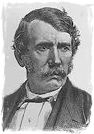
This young doctor was David Livingstone, born in Blantyre, Scotland, March 19, 1813. He became the Pathfinder of Africa, whose eventful career is the story of many long, exciting, winding trails.
I. The Pathfinder's Vision of a Far-Off Trail
After hearing Robert Moffat, young Livingstone's mind was haunted by the vision of a distant trail, leading to Cape Town and on to Kuruman, South Africa, thence to the great plain on the north with its teeming villages without the saving Gospel. His favorite passage now spoke to him with new imperiousness. Two commands and a promise stood out in bold relief, as if Christ were speaking directly to him:
"Go!—as a trail-blazer, a pathfinder, a pioneer! Evangelize!—do the work of a missionary! And lo, I am with you!—hence you will never be alone and you will have nothing to fear!" "That is a promise I can rely upon," said Livingstone, "for it is the word of a Gentleman of honor."
Shortly thereafter he received appointment under the London Missionary Society. He hurried home to Scotland for a one-day visit with his parents. He saw the cotton mill where, beginning at the age of ten, he worked from six in the morning till six at night, and remembered how, by, placing a book on a portion of the spinning jenny so he could catch a few sentences in passing, he managed to study Latin and to read a wide variety of books. He recalled a venerable neighbor, David Hogg, who on his death bed had said to him: "Now, lad, make religion the every-day business of your life, not a thing of fits and starts."
Livingstone's parents were devout Christians and entered heartily into his missionary plan. As they talked together that last evening about the things of Christ and His kingdom, they agreed that the time would come when people of wealth and station would support missionaries instead of hounds and horses for the chase. According to the family custom, they were up at five the next morning. David read a Scripture selection and led in family prayer. The Scripture he selected was one which tells of the Divine overshadowing and of the presence of an Unseen Friend in every circumstance and on every trail: "The Lord is thy keeper ... the Lord shall preserve thee from all evil ... The Lord shall preserve thy going out and thy coming in from this time forth, and even for evermore" (Psalm 121:5,7-8).
A few days later he stood on the deck of an ocean steamer with the open Bible in his hands and a far-away look in his eyes. He was dreaming of adding an entire continent to the domain of Christ! Whatever the cost, he would find a path to the heart of Africa so that he, or his successors, might draw Africa up close to the yearning heart of God!
He was not only a dreamer of noble dreams. He was also a person of practical sagacity. Often during the long voyage he could be seen standing near the captain of the vessel asking questions and learning how to find exactly where the ship was on the pathless ocean, making observations of the moon and the stars by means of certain instruments. "I shall need this knowledge," he said, "to guide me across the pathless deserts and jungles of Africa."
II. The Pathfinder's Trail in the Desert
Landing at Algoa, he traveled seven hundred miles by ox-wagon to Kuruman, which the Moffats had transformed from a piece of desert into a garden of beauty and fruitfulness. After giving the oxen a few days' rest, he continued his journey to Lepelole. The tribe living there called themselves Bakwena, or the People of the Crocodile—that being their sacred animal. He built a house forthwith and began to study the language. After six months of diligent application, he could converse or preach freely in the Bakwena language. A year after his arrival in Africa, he wrote to his father: "The work of God goes on here notwithstanding all our infirmities. Souls are being gathered continually. Twenty-four were added to the church last month."
Upon his return from a preaching tour, he found that his people had been killed, captured, or driven away by fierce natives of another tribe. So he traveled north a two weeks' journey to Mabotsa. Here lived the Bakhatla, the People of the Monkey, and here he built another house. As he traveled among the villages, his ox-cart was frequently besieged by crowds of sick, suffering folk, begging the great white doctor to heal them. At night he would sit among the people around the village fire listening to tales of the mighty exploits of ancient heroes. Then he would stand and tell the story of the greatest Hero of all ages, the story of Jesus coming from heaven to earth to die on the Cross. The wonder of Christ's atonement was much in his thinking and in his preaching. The first song he translated into the native language was, "There Is a Fountain Filled With Blood." One night, while defending the natives against an attack by a wild beast, he broke his finger. Seeing the blood flowing from the injured finger, the people exclaimed: "You saved our lives by wounding yourself. Henceforth our hearts are yours." Telling of the incident in a letter, Livingstone remarked: "I wished that they had felt gratitude for the blood that was shed for their precious souls by Him who was wounded for their transgressions, and had given their hearts to Him."
It was at Mabotsa that Livingstone had his famous encounter with the lion. Lions were numerous in this locality, and the villagers were terrified because, as they said, "The lion, the lord of the night, kills our cattle and sheep even in the daytime." Livingstone knew that if he could kill one of the lions, the others would flee. So, taking his gun and telling the people to bring their spears, he led the villagers on a lion hunt in which he almost lost his life. Seeing an enormous lion behind a bush, he aimed and fired both barrels. While he was reloading, the lion suddenly sprang toward him. He says of this attack, "The lion caught me by the shoulder and we both came to the ground together. Growling horribly, he shook me as a terrier dog does a rat." Seeing several natives approaching to attack him, the lion sprang upon two of them, biting one in the thigh and the other in the shoulder. But at that moment the bullets the great beast had received took effect and he fell dead. Livingstone had eleven tooth marks as permanent scars and the bone at the top of his left arm was crunched into splinters. The imperfect setting of this bone produced a stiff arm and caused much suffering the rest of his life.
While his arm was healing, he traveled back to Kuruman for a visit with the Moffats. He had expected to remain a bachelor missionary, but while recuperating at Kuruman he loved and married Moffat's oldest daughter, Mary. She exchanged one great name for another and honored both.
Another missionary came to Mabotsa, so David and Mary established a new station at Chonuane, and there, with his own hands, he built his third house. One day the chief, Sechele, called all his people together and listened to the white man's message. "This is wonderful," exclaimed the chief. "But my forefathers were living, at the same time yours were. How is it that they never heard of the love of God and of Jesus the Saviour? Why did they all pass away into deep darkness?" The chief's words still sound out an indictment against the Christian church, which even now is trifling with our Lord's command to evangelize all nations. No less than three-fourths of mankind are now passing out into the terrible darkness of which Sechele spoke so sadly.
Why was the Gospel so slow in coming?
Why did our fathers pass away into deep darkness?
Does not the Lord's command require obedience?
Does not the king's business require haste?
The chief became a very zealous convert and, with his encouragement, the whole village began to attend the Mission school. But soon the Livingstones had to move again, because the water supply failed. The day after Livingstone had announced that he was moving to Kolobeng, he noticed the people rushing about as busy as ants. They had decided to go to Kolobeng, too, for they felt that they could not live without their white friend, who healed their diseases, taught them to read, and told them of a wonderful Saviour.
The country around Kolobeng was full of wild beasts. Standing at the front door of his own house, Livingstone shot a rhinoceros and a buffalo. He taught the people the value of irrigation and helped them in many ways, but what he enjoyed most, he says, was "to preach the unsearchable riches of Christ, for it always warms my own heart and is the great means which God employs for the regeneration of our ruined world."
For several years there was so little rain that the land became very parched and even the river dried up. They must move again! But where? Livingstone wanted to go to the country of the Makololos, a numerous and famous race hundreds of miles to the north, but he would have to cross the Kalahari desert, a feat which Sechele said was impossible for a white man. However, Livingstone crossed it, discovered beautiful Lake Nagami, August 1, 1849, and returned for his family.
The Queen of the Wagon dreaded the prospect of crossing the desert with three children, but she did not complain. On the way they were startled at times to see one or two of the oxen suddenly drop out of sight, having fallen into a pit dug and covered over by the desert people to catch game for food. They came to a part of the desert where for three days they did not see a sign of life of any kind—man, bird, or insect. Their reserve water supply was exhausted and nowhere could they find even a spring. For four terrible days they were absolutely without water, the children moaning and crying with the burning thirst. Weakened by these ordeals, the children became very ill, as did also Mrs. Livingstone; thus, they were compelled to return to Kolobeng, where one of the children died.
Livingstone now had to make a great and difficult decision. He loved his family dearly, but he felt that it would be cruelly wrong to risk further the lives of his children in the desert regions; moreover, he believed that God was calling him to explore the great unknown recesses of Central Africa. So with a very sad heart he took the family on the long journey to Cape Town and sent them to England. As he started back on the long, lonely trail far to the north, his sorrow was eased by the hope of completing his explorations in two or three years and of finding a suitable site for a mission where he could settle with his family. He did not know the many long years of separation that lay ahead.
III. The Pathfinder's Trail of Many Waters
In turning definitely to the work of exploration, Livingstone was not motivated either by a mere love of adventure or a trader's greed for gain. He had a four-fold object:
(1) It was his purpose to find water and suitable locations for missionary work. The vast area in which he had formerly been working was almost devoid of water and quite unpromising from the missionary standpoint. One day a native who had traveled extensively said: "Far away to the north there is a country full of rivers and of large trees." If that were true, it meant that the unknown areas of Central Africa were inhabited by millions of people for whom Christ died. What a great missionary challenge would thus be brought to light!
(2) It was his object to discover the true nature of Central Africa. At that time the people of England and America believed that Africa was made up largely of one vast desert, stretching all the way from the Kalahari desert in the south to the Sahara desert on the Mediterranean. Livingstone hoped to show—and did—that this view was quite erroneous and that Central Africa was a vast country full of rivers, rich in vegetation, and teeming with people. Moreover, he knew that three great rivers—the Nile, the Congo and the Zambesi—emptied their waters into three separate oceans, and he was lured on by the hope of discovering their sources and thereby opening up a continent to civilization, commerce, and Christianity.
(3) He wanted to find a trail, preferably by water, for communication and trade from the heart of the continent to both the east and west coasts.
(4) He was eager to expose the horrors of the slave trade and to promote means by which to heal what he termed "this open sore of the world."
With these high goals in view, he set out upon the trail of many waters, declaring: "I will open a path into the interior or perish. Although Sekeletu, the chief of the Makololos, knew that the trip to the coast was long, difficult, and full of perils, he sent twenty-seven of his bravest men to bear the luggage and help "Nyaka" the doctor. These men set out on this hazardous and tremendous pathfinding simply out of love for the Pathfinder, for he had no money with which to pay for such an expedition. His luggage included some spare clothes, a case of medicines, his Bible, a magic-lantern, a small tent, and some instruments for telling latitude and longitude.
They had many harrowing adventures, but finally, after journeying for more than six months by canoe, ox-back and on foot, through forests and flooded rivers, in peril from wild beasts and savage men, for 1500 miles of jungles which no white man had ever traversed before, Livingstone and his men came to Loanda on the west coast. He had suffered thirty-one attacks of intermittent fever, had been assailed by huge swarms of fierce mosquitoes, and was reduced to "a bag of bones." Yet he staggered on. "Cannot the love of Christ," he asked, "carry the missionary where the slave trade carries the trader?" He was not a missionary part of the time and something else the rest of the time. He was a missionary all the time, whatever the means he was using, whether healing, teaching, or exploring. "The end of the geographical feat is only the beginning of the missionary enterprise," is an oft-quoted saying of his. His ultimate objective was always to honor his Lord. "I am a missionary, heart and soul," he insisted. "God had an only Son and He was a Missionary. I am a poor imitation, but in this service I hope to live and in it I wish to die." His soul was mastered by the logic of love! "God loved a lost world and gave His only Son to be a missionary. I love a lost world and I am a missionary, heart and soul. In this service I hope to live and in it I wish to die."
At Loanda, Livingstone found a British vessel. The captain said: "You are ill and worn out after these fourteen years of arduous travel. Come with us to England and rest—and see your family again." It was a most inviting prospect, but he could not desert his Makololo companions who had repeatedly hazarded their lives for him and who, without him, would surely be captured and sold as slaves. And is it not significant that the ship was never heard of again, never reached England?
So, after a rest, and having secured some beautiful costumes and other presents for his black men, he turned his face again toward the interior. After perilous escapes from crocodiles, hippopotami, and the javelins of hostile savages, Livingstone and his men reached Linyanti, the home of the Makololo, though the Pathfinder himself was nearly deaf from rheumatic fever and almost blind in consequence of being hit on the eye by a branch in the thick forest. He was amused to overhear one of his men boasting: "We went on and on till we had finished the whole world." Another, remembering the impression created by the sight of the limitless blue ocean, said: "We kept on marching, believing that what the ancients had told us was true, that the world had no end; but all at once the world said to us, 'I am finished! There is no more of me!'"
Chief Sekeletu was proud of having helped Livingstone. He now sent 120 of his men with him as he set out down the Zambesi River toward the east coast. They came to a forest where lived the tsetse fly so deadly to horses and oxen, and, despite a torrential downpour of rain, they took the animals through at night when the tsetse fly sleeps. One day Livingstone saw five columns of vapor rising far ahead and heard the sound of distant booming. "It is Sounding Smoke," said the Makololo. Livingstone was the first white man who ever saw "Sounding Smoke," a magnificent spectacle twice as large as Niagara Falls. He named it Victoria Falls. Another day a herd of buffalo came charging at him and he escaped by climbing an anthill twenty feet high. Several times each day he got thoroughly soaked crossing streams and marshy places. His bed was a pile of grass. His food often consisted of bird seed, manioc roots, and meal. Even these were often unobtainable and, for days at a time, he knew the gnawing of hunger.
On reaching the coast, he found satisfactory work for his men and sailed away to England to see his wife and children again, after a separation of five years. The loneliness of those years and the gladness of meeting are embodied in the following lines written by Mrs. Livingstone:
A hundred thousand welcomes!
How my heart is gushing o'er
With the love and joy and wonder
Thus to see your face once more.
And there's nothing but the gladness
And the love within my heart,
And the hope so sweet and certain
That again we'll never part.
You'll never part me, darling,
There's a promise in your eye;
I may tend you while I'm living,
You may watch me when I die;
And if death but kindly lead me
To the blessed Home on high,
What a hundred thousand welcomes
Will await you in the sky!
While at home he wrote his first book, "Missionary Travels," made numerous addresses and was the recipient of many honors. His father had passed away, but it was undiluted joy to be with his mother and family again. The happy months sped by, and he again set his face toward the far-off trail, accompanied by Mrs. Livingstone and their youngest son. By the time they reached Cape Town, Mrs. Livingstone's health was so bad she went first to Kuruman to see her parents, then back to Scotland, while he continued his explorations. He was rewarded by the discovery of beautiful Lake Nyassa, September 18, 1859. One day he shot two enormous pythons and saw a herd of elephants which, by actual count, numbered eight hundred. Frequently as they churned along some stream in the launch which Livingstone brought with him from England, savages, lurking in the bush and taking him to be one of the hated slave traders, shot poisoned arrows which struck uncomfortably near.
IV. The Pathfinder's Trail of Anguish
Livingstone went down to the Zambesi with much joy, knowing that at last Mrs. Livingstone was coming to be with him and to make for him a home. But just a few weeks later, at Shupanga, she was smitten low with fever and, despite his utmost care, passed away. Long years ago the Master had promised, "You will never be lonely or forsaken, for I am with you!" "This is the promise of a Gentleman of sacred honor," said Livingstone; "He will keep His word." Had the promise been broken? Was he now forsaken?
He was tempted to think so as he knelt beside that sad and lonely grave under the baobab tree in the African wilderness. The brave man who had endured so many hardships and faced death so many times, now wept like a child. "Oh, Mary, my Mary, I loved you when I married you, and the longer I lived with you, the more I loved you! Now I am left alone and forsaken in the world." Alone? Forsaken? Ah, no! As he knelt in prayer, he remembered the word of Him who promised to be with him on every shore and in every experience. "Leave me not! Forsake me not!" cried the broken hearted man. And, in answer, he heard the whisper of his Unfailing Companion, "Lo, I am with you," and felt around him the tender embrace of the Everlasting Arms.
V. The Pathfinder on the Trail of Savage Customs
In the course of his extensive travels, Livingstone came in contact with many strange, and often hideous, customs. While passing through the country of the Baenda-Pezi, or Go-Nakeds, the people appeared quite unashamed in full dress which usually consisted of nothing more than some red juice smeared over the body and a long tobacco pipe suspended from the mouth. Among the Bakaa, a child who cut the upper front teeth before the lower was always put to death. Among the Maravi the women were in the habit of piercing the upper lip and gradually enlarging the orifice until they could insert a shell. The distended upper lip gave them a very unsightly appearance and caused them to be known to others as "the duck-billed women," though among their own people they were considered especially beautiful. In one tribe they enhanced their beauty by filing their teeth, while the Batoka tribes accomplished the same result by knocking out their upper front teeth at the age of twelve, the result being that the lower teeth grew very long and bent outwards at the ends, thereby causing the lower lip to protrude in a very uncouth manner.
Various methods of salutation were in vogue among the different tribes. Some would pick up a handful of sand or ashes and rub it on their arms and chest. Others would drum their ribs with their elbows. The people of the Batonga tribe greeted Livingstone by lying on their backs on the ground, rolling from one side to the other, and beating their sides with their hands.
Livingstone often heard the heart-rending death wails in connection with funerals. When the natives of Angola and certain other areas turned their eyes toward the future world, their superstitious beliefs almost drove them frantic. They fancied themselves to be the helpless victims of the fickle and malicious dispositions of disembodied spirits. Hence they were constantly seeking to appease the spirits of the departed. Moreover, they believed that death was caused only by witchcraft and could be averted by the use of charms. Among the Barotse and other races, whenever a chief died, a number of his servants were slaughtered to provide attendants in the other world. In Angola, a funeral was the occasion of dancing, feasting, and debauchery. The great ambition of the natives was to give their friends an expensive funeral with emphasis on food and drinks. When, on such an occasion, Doctor Livingstone said to a black man, "why are you intoxicated?" this was the answer, "My mother is dead and I am celebrating."
Among the Batokas, the chiefs vied with each other in exhibiting human skulls as trophies of valor, as American Indians exhibited the scalps of their enemies. On one occasion Livingstone saw fifty-four skulls dangling from poles around a chief's house.
In one section lions were exceedingly numerous because the people made no attempt to kill them. This was due to the common belief that the souls of their chiefs entered the bodies of these great beasts. They even believed that a chief had the power to metamorphose himself into a lion, kill anyone he considered his enemy and then return to the human form. Consequently, whenever these people saw a lion, they commenced clapping their hands by way of salutation and of expressing good will.
In Cassenge and certain other districts, thousands perished every year because of the poison-ordeal. If misfortune befell some of the people of a village, perhaps through sickness or lack of success in a hunting expedition, it was believed that someone was practicing witchcraft on them, and the witch doctor was called to "smell out" the guilty party. Having done this by means of his incantations, he gave the accused person a glass of poison to drink. If the person died, which almost in variably happened, he was clearly guilty! Often one person would directly accuse another of using witchcraft to cause harm. Whether directly accused or "smelled out" by the witch doctor, the accused person was ready or even eager to drink the poison, believing that the ordeal would vindicate his or her innocence.
Livingstone made no attempt to gloss over the horrors of heathenism. Yet he recognized that these people, however degraded, were among those for whom Christ died, and he unweariedly pointed them to the Lamb of God. He says:
The more intimately I become acquainted with barbarians, the more disgusting does heathenism become. It is lamentable to see those who might be children of God, dwelling in peace and love, so utterly the children of the devil. Oh, Almighty God, help! help! and leave not this wretched people to the slave-dealer and Satan. Help them to look to Christ and live.
VI. The Pathfinder on the Trail of the Slave Trade
After the death of Mrs. Livingstone at Shupanga, the Pathfinder realized that he was fast nearing the end of his own trail, and dedicated his remaining time and energies to the high task of opposing the traffic in human lives believing that thereby he would be rendering the largest possible service to Africa and to the cause of Christ. He states in his Journal: "I will place no value on anything I possess or anything I may do, except in relation to the Kingdom of Christ."
In 1864 he went to England for his second and last visit, to seek consolation among his children and to arouse the people of Britain to the recognition of their Christian obligation toward the Dark Continent. He was in the homeland one year. He should have rested and built up his strength, but instead spent most of his time interviewing Gladstone and other notables, delivering speeches exposing the iniquitous slave trade, and writing a book, The Zambesi and Its Tributaries, full of pathetic stories of Africans being captured by Arab and Portuguese slave traders and driven in chains to be sold in the slave market, though probably five out of every six of them would perish on the way from floggings, starvation, and broken-heartedness.
Returning to Africa, he walked down to the Zanzibar slave market where he saw three hundred Africans up for sale and three hundred others being brought into town.
He could hardly foresee, that, not many years after his death and largely through his influence, not only would the slave traffic be abolished, but a beautiful church would be erected on the very site of the Zanzibar slave market.
He started now on his last trail. Every day, when traveling in his launch, he saw corpses floating by in the water. Every morning the paddles had to be cleared of dead bodies caught by the floats during the night. Most of the journey was made on foot and, said Livingstone: "Wherever we walk, human skeletons are seen in every direction. This region, which only 18 months ago was a well-peopled valley of villages and gardens, is now a desert literally strewn with human bones."
One day he came suddenly upon a long line of men, women, and children, chained to one another, with cruel slave-sticks fastened around the necks of the men. Slave drivers, carrying muskets, swaggered along beating the captives with whips to make them go faster. Just then the slave traders spied Livingstone and fled pell-mell into the forest. With great rejoicing, he cut the bonds of the women and children, then sawed off the chains and the slave-sticks from the men. These people, of whom there were eighty-four, freed first from physical slavery and later from the slavery of sin through faith in Christ, became the first-fruits of a great harvest in this section of Africa.
As he traveled deeper into the interior, many hardships befell him. The slave-traders had burned hundreds of villages and it was almost impossible to obtain food. "I took up my belt three holes to relieve hunger," he wrote in his Journal. Worst of all, one of his men ran off with his precious medicine box. Now he had no quinine with which to fight the ever recurring fever. "This loss," he says, "is like the sentence of death." Ill with fever and half-starved, he staggered along the trail till he saw the blue waters of Lake Tanganyika, then on till he discovered Lake Moero and, many months later, Lake Bangweola. Awful sores appeared on his feet. He suffered terribly from dysentery and other ailments causing much loss of blood. All his companions deserted him but three. Finally he reached Ujiji, only "a ruckle of bones," to find that all his provisions and goods had been stolen. He felt himself to be the man who was robbed and left helpless on the Jericho Road, but he did not know that the Good Samaritan was close at hand.
One of his men rushed up shouting, "A white man is coming! Look!" Down the village path walked a white man at the head of a caravan of African followers with the flag of the United States unfurled over their heads. It was Henry M. Stanley, happy to find Livingstone at last. Livingstone was very happy, too. This was the first white man he had seen in five years. Moreover, Stanley brought a quantity of wholesome food for him and letters from his children in England.
"How do you come to be in this remote place?" inquired Livingstone. Then Stanley told how, exactly two years before, he had been summoned by James Gordon Bennett of the New York Herald, who said: "Stanley, it is reported that David Livingstone is dead. I do not believe it. He is far away in Central Africa, lost, ill and stranded. I want you to go and find Livingstone, and give him any help he needs. Never mind the cost. Go and find Livingstone, and bring him back to the civilized world." Such was the commission given by one man to another. And what is our commission, O Christians? In tones of imperious tenderness, our living Lord is saying to us, as He said to Carey and Judson and Livingstone: "Go and find lost men. The cities and plains, the continents and islands, are full of lost people for whom I died. Never mind the cost. Never mind the difficulties. Go and find lost souls and bring them to Me." At tremendous cost and after encountering almost insuperable difficulties, Stanley carried out his commission. What are we doing with ours?
For four months the two men lived together, talked, and traveled. "You have brought me new life," Livingstone repeated again and again; "you are my Good Samaritan." Stanley tried to persuade Livingstone to accompany him to England and see his children. "I must finish my task," the Pathfinder replied. And with sad hearts and misty eyes, the two great travelers grasped hands and said, "Farewell." Livingstone was never seen by a white man again.
Stanley was tremendously impressed with Livingstone's character. This is his estimate:
For four months I lived with him in the same house or in the same boat or in the same tent, and I never found a fault in him. His gentleness never forsakes him. No harassing anxieties, distraction of mind, long separation from home and kindred, can make him complain. He thinks all will come out right at last; he has such faith in the goodness of Providence.
Right at last! He had staked everything on the promise, "Lo, I am with you," knowing that this would take care of everything. Will "all come out right at last?" We shall see.
Turning his face toward the hinterland, he set out again on the sad slave trail. On his 59th birthday he made this entry in his Journal:
March 19th, birthday. My Jesus, my King, my Life, my All; I again dedicate my whole self to Thee. Accept me and grant, O gracious Father, that ere this year is gone, I may finish my task. In Jesus' name I ask it. Amen, so let it be. David Livingstone.
Not long after this he sent a letter to the New York Herald, seeking to secure American help in stamping out the slave trade. He closed his letter with these words which are now to be found on his memorial tablet in Westminster Abbey: "All I can add in my loneliness is, may Heaven's richest blessing come down on every one, American, English, or Turk, who will help to heal this open sore of the world."
Although Livingstone was not successful in his desire to locate the source of the Nile, he deserves to rank as one of the world's greatest explorers. He traveled 29,000 miles in Africa, discovered Victoria Falls and four important lakes (Ngami, Nyassa, Moero, and Bangweola) besides several rivers, and added to the known portion of the world about a million square miles of territory. Yet these accomplishments in themselves were only secondary in his estimation. His all-encompassing objective was to open a way for the heralds of redemption and to apply the Gospel to the task of abolishing the slave trade in the name of Him who said: "The Spirit of the Lord is upon me, because he hath anointed me to preach the gospel ... to preach deliverance to the captives ... and to set at liberty them that are bruised."
The Pathfinder became so weak and suffered such agonies of pain, he had to be carried in a stretcher by his remaining black men. At length they came to Chitambo's village, a little hut was quickly built, a rough cot prepared, and early the next morning, May 4, 1873, they found him dead. Two of his servants, Susi and Chumah took charge of affairs and displayed a devotion which has seldom, if ever, been equaled. His Journal, papers and instruments were carefully packed in watertight boxes. The heart of the missionary was buried in the land to which he had given all his heart, while the body, after being embalmed by native methods, was taken on the long march to the coast and then sent to England.
April 18, 1874, accompanied by Henry M. Stanley, his wife's aged father, Robert Moffat, and a great concourse of people, the remains were taken to their final resting place in Westminster Abbey. Thus was accorded to David Livingstone the highest honor which his native land could bestow.
VII. The Pathfinder's Companion on Every Trail
As a young man, Livingstone saw a vision of "the smoke of a thousand villages where no missionary has ever been" and heard a Voice saying: "Go! Preach the Gospel and explore the unknown continent. Make disciples and open a way for the Gospel." It seemed an impossible assignment, until the Voice added: "You will never be alone and you have nothing to fear. Lo, I am with you all the way." Did the promise hold good? Did the Presence ever fail him?
He was on the bank of the Zambesi River, surrounded by fierce and infuriated savages who threatened to kill him. At any moment spears might come hurtling through the darkness, or perhaps the attack would come at dawn. Opening his tin box and taking out his Bible, he read a precious passage. Let the story be told in his own words as found in his Journal:
January 14, 1856. See, O Lord, how the heathen rise up against me, as they did to Thy Son. I commit my way unto Thee. 'A guilty, weak, and helpless worm, on Thy kind arms I fall.' Oh Jesus, leave me not, forsake me not!
The Journal contains another entry written that night:
Evening. Felt much turmoil of spirit in view of having all my plans for the welfare of this great region knocked on the head by savages tomorrow. But I read that Jesus came and said, 'All power is given unto me in heaven and in earth. Go ye therefore, and teach all nations -- and lo, I am with you always, even unto the end of the world.' It is the word of a Gentleman of the most sacred and strictest honor, so there's an end of it. I shall take observations for latitude and longitude tonight, though they may be the last. I feel quite calm now, thank God.
The words, "Lo, I am with you" are underlined in his Journal, because they were first inscribed and underlined in his heart. Later, while on his first visit to the homeland, he was the recipient of the degree of Doctor of Laws at the University of Glasgow and stood before the convocation audience to speak. His body showed all too clearly the evidences of exposure, of privations, and of more than thirty attacks of tropical fever. His left arm, crushed under the lion's teeth, hung stiffly at his side. The great assembly was awed to silence and melted to tears as he related his experiences and then announced his impending return to Africa. "But I return," he said, "without misgiving and with gladness of heart. For would you like me to tell you what supported me through all the years of exile among people whose attitude toward me was always uncertain and often hostile? It was this: Lo, I am with you always, even unto the end of the world! On those words I staked everything and they never failed! I was never left alone."
Shadrach, Meshach, and Abed-nego were not alone in the fiery furnace! Daniel was not alone in the den of lions! Livingstone was not alone when surrounded by infuriated savages! David Livingstone staked everything on the Master's promise. Did it ever fail?
The Pathfinder is sitting in his little hut on the bank of a stream, far away in the interior. He is greatly dejected in spirit. His strength has been sapped by many attacks of fever and he wonders if he has much longer to live. His heart bleeds as he sees the depravity of the people around him—forever fighting, plundering, and killing; capturing and selling each other into slavery; and committing such atrocities he is tempted to wonder if the light of the gospel will ever dawn in their wretched souls. He shudders as he remembers how, just a few hours earlier, the savages had seized two men, and, before his very eyes, had hewn them to pieces with their axes. It seems more than probable that he will be a victim of savage ferocity or cut off by some tropical disease. Something like a moan escapes his lips as he murmurs, "If I only had someone to talk to! Someone who understands! Someone who cares!" Taking his Bible, he reads several favorite passages, then kneels -- that being the posture he always assumed in prayer, whether praying in private or with the natives. "Good and gracious Jesus," he prays, "Thou art ever near. Thou knowest my yearnings after these people. Thou art my comfort and my keeper. Stay with me, Lord, till my work is done."
"Thou are ever near." Someone to talk to!
"Thou knowest." Someone who understands!
"My comfort and my keeper." Someone who cares!
"Stay with me." "Lo, I am with you all the way!"
Thus accompanied and thus reassured, he continues his labors. "I am immortal," he declares, "till my work is accomplished. And though I see few results, future missionaries will see conversions follow every sermon. May they not forget the pioneers who worked in the thick gloom with few rays to cheer, except such as flow from faith in the precious promises of God's Word."
Did the promise and the Presence ever fail him? At last, weary from long travels, weakened by manifold deprivations, almost famished for lack of food, and broken by disease, David Livingstone lay on a rude cot in Chitambo's village. One of the black men was keeping watch. Hearing the sound of approaching feet very early in the morning, he inquired, "Whom do you seek and what do you want?" The spokesman replied, "We are seeking the great White Doctor. We have come to urge him to go with us to our village to take away the pain from our sick. May we talk with him?" Peering into the hut the watcher saw the white man on his knees by the cot. Turning to the delegation he said, "You'll have to wait a while. The White Doctor is ill. Besides, he is praying to his God and must not be disturbed."
After a while several weary men appeared from the jungle with the message, "Our chief has sent us a long journey to ask the White Missionary to go again to our tribe to tell us more about Jesus who died for us black people." After peering into the hut, the watcher said, "The White Missionary is praying beside his cot. Let us not disturb him now."
Just at dawn another delegation arrived to report, "We are friends of the White Missionary. Hearing of his illness we have come to see him and to offer our assistance to the one who has helped us in so many ways." Looking again into the hut and seeing his master still on his knees, the watcher in alarm called for Susi and Chumah. Entering, they found the Pathfinder on his knees, but his soul had departed.
His Lord had promised, "Lo, I am with you all the way, even unto the end." Did the promise fail him at last? Remember, he died on his knees! Was his Lord's presence with him even unto the end? He died in the act of prayer! His last words were praying words. He was not alone! He was talking to Somebody! As he entered the valley of shadows and took the road across the river, David Livingstone was holding sweet converse with the One who was his Unfailing Companion on every shore, in every solitude, and on every trail!
Used with permission. From Giants of the Missionary Trail: The Life Stories of Eight Men Who Defied Death and Demons by Eugene Myers Harrison. Originally published by Scripture Press, Book Division, [1954].
>> More David Livingstone