 The Personal return of the Son of God from Heaven is the hope of the Believer
and of the Church. This is the great event to which the Lord Himself
has directed the hearts of His people. It was for this that the saints
of early days were looking. The Church in her early love and beauty was
waiting for her Lord, as the expectant bride with yearning heart, waits
for her bridegroom. To see the One who loved her and who was loved by
her was her hope. But the mists of traditions soon arose, and "the
hope" became obscured. Love waxed cold, and worldliness set in;
then the desire for the speedy advent of the Lord declined and soon the
doctrine was conceived and spread abroad that He would not, and could
not come, for many generations. For century after century this has held
the field, and even now is believed and accredited as truth by thousands
who bear the Christian name. Strange are the theories and manifold the
speculation, which have been conceived and propagated since the Church's
proximate and proper hope was hid to the eye of faith; some so crude
and irrational that they have turned the subject into ridicule; others
so ingeniously set with perverted Scripture that even God's own saints
have been misled thereby. The conversion of the world; the universal
spread of Christianity; the fulfillment of many prophecies, and death,
have all been raised between the believer and the personal return of
his Lord.
The Personal return of the Son of God from Heaven is the hope of the Believer
and of the Church. This is the great event to which the Lord Himself
has directed the hearts of His people. It was for this that the saints
of early days were looking. The Church in her early love and beauty was
waiting for her Lord, as the expectant bride with yearning heart, waits
for her bridegroom. To see the One who loved her and who was loved by
her was her hope. But the mists of traditions soon arose, and "the
hope" became obscured. Love waxed cold, and worldliness set in;
then the desire for the speedy advent of the Lord declined and soon the
doctrine was conceived and spread abroad that He would not, and could
not come, for many generations. For century after century this has held
the field, and even now is believed and accredited as truth by thousands
who bear the Christian name. Strange are the theories and manifold the
speculation, which have been conceived and propagated since the Church's
proximate and proper hope was hid to the eye of faith; some so crude
and irrational that they have turned the subject into ridicule; others
so ingeniously set with perverted Scripture that even God's own saints
have been misled thereby. The conversion of the world; the universal
spread of Christianity; the fulfillment of many prophecies, and death,
have all been raised between the believer and the personal return of
his Lord.
It is with an earnest desire to lead fellow-believers to read and search the Word of God for themselves, and to find therein that "testimony of the Lord" which "is sure," and makes "wise the simple," that we would seek to look at some of our Lord's own sweet words of promise, and of those of His apostles inspired by the Spirit, that teach us to look for His personal return as the hope of our hearts.
May He who walked with the two on the Emmaus' road, expounding to them "in all the Scriptures the things concerning Himself," causing their heart to burn within them, draw near to us, and so speak, that our daily longing, yearning cry shall henceforth be, "Come, Lord Jesus."
The Lord's Own Promise.
It was in an upper room in the city of Jerusalem, with His eleven true followers gathered around Him, that the first full intimation of His going away from them and His personal return for them was given. It is recorded in John 13:33 to 14:3. These are the very first words He had plainly spoken to them of His going to the Father's house and His coming back again. They are in harmony with His presentation as the Son of God, given in the Gospel according to John throughout. What we have in Matthew regarding His coming is as the King, and in Luke as the Son of Man, but here it is the Son of God going to the Father and returning to receive His loved ones to the Father's House, the place of love. His disciples were very sad and sorely troubled at the thought that He was about to leave them, and that they were to be without Him in a dark and evil world. It was just then that the words were spoken—"In My Father's house are many mansions: if it were not so, I would have told you. I to prepare a place for you. And if I go and prepare a place for you, I will come again, and receive you unto Myself; that where I am, there ye may be also" (John 14:2-3). This is what is called "The Promise" (Hebrews 10:36) ... The manner and the accompaniments of His return are made fully known by the Spirit, through the Apostles, in the Epistles, but here we have the personality of it.
(Note—The Manner of the Lord's Return. The commonly held opinion that the Second Advent of the Lord will be "at the end of the world, to judge all mankind," is a strange contradiction of all that the Scriptures, and especially the Epistles teach us, regarding the various aspects of our Lord's return. To fail in distinguishing His coming for His own, which the world may neither see or hear, from His return with His own in power and glory on the clouds of heaven, in flaming fire, accompanied by angels, to execute judgment, is to confuse everything, and make the reverent study of prophetic truth a hopeless puzzle. But if we put away preconceived opinions, set aside theological discussions, and cease to read Scripture in light of the Creeds, taking the Word alone as our guide, and noting the distinctions as to times and peoples and dispensations which it makes, the whole subject will stand forth in its order and completeness, without confusion, in perfect symmetry.)
It is from His own lips that we have this first sweet promise "I will come again" (lit. "I come again"). And it is direct from Himself again that we hear of it for the last time, in His own words from the highest heaven, "Surely I come quickly" (Revelation 22:20). The wonder is, that any should have mistaken the meaning of these words. Yet this has been done, and instead of the personal return of the Lord Jesus to receive His own, death, fulfillment of prophecy, the conversion of the world, and the progress of science, have all been made to fill the place of the believer's hope. The One who said "I go," is the One who says "I will come."
The testimony of the heavenly visitors, who came forth to speak to those who witnessed His ascension to the right hand of God was, "This same Jesus, which is taken up from you into heaven, shall so come in like manner as ye have seen Him go" (Acts 1:11). It was Himself, the Eternal Lover of His people, who was taken up from the midst of His disciples in the act of blessing them, and it is "the Lord Himself" who "shall descend from heaven with a shout" to receive His people to His heart and home. Yet it has been asserted by men of influence, and received as true by many, that the only "coming" of the Lord for which Christians are to look, is a "spiritual" coming, or "a coming to the heart." Now, we do not for a moment doubt that there is a sense in which the Lord comes and takes up His dwelling in the hearts of His people (Ephesians 3:17). Equally true it is, that to those who love the Lord, and keep His words, both the Father and the Son come and make their "abode" (or "mansion"—the word is the same as in verse 2) (John 14:23). But neither of these, nor any season of spiritual reviving or refreshing, which may come to the saints on earth, is the fulfillment of the promise of the Lord— "I will come again and receive you unto Myself." Nothing short of the Lord Himself, His personal return and presence, can fulfil the promise, or satisfy the believer's heart. And not only is it a Person for whose coming we are taught to look, but the very same Person who went away. "This same Jesus ... shall so come" (Acts 1:11). Eighteen centuries in that bright glory, where He now is, exalted to the highest place in heaven, surrounded by myriads of holy beings, have wrought no change in Him. He will come forth "the same Jesus" as when He took the babe in His arms and blessed it, or stood by the grave of Lazarus and wept. True, He is now glorified, and no longer in the form of a servant as when He trod this earth. But He has carried His Manhood with Him into Heaven, and there, amid all the glory of the eternal throne, He lives as the God-Man. And as such He will come again. There on that bright throne He sits, waiting for the hour when He shall receive and welcome the Bride for which He bled, to be for ever with Himself.
There, amid the songs of heaven, sweeter to His ear,
Is the footfall through the desert, ever drawing near;
There made ready are the mansions, glorious, bright and fair,
But the Bride the Father gave Him, still is wanting there."
He waits, as Isaac waited for the home-bringing of Rebekah; we look, as Rebekah looked for Isaac, until their eyes met, and the bride was presented to the son by the faithful servant. It is not events, it is not prophecies fulfilled, it is not even glory, but it is the Lord Himself, we long to see. Not the crown He giveth, but the pierced hand. Not heaven, but "His face." To illustrate this: When the British soldiers returned victorious from Egypt, there was great excitement in London on the day of their arrival. Banners were flying, and crowds waited to do honour to the conquerors. By and bye there was a public banquet, and the Queen herself decorated those who had distinguished themselves by acts of heroism. But there stood on the platform awaiting the arrival of the train, one solitary person, absorbed in the object of her hope. She was a soldier's bride. More than banners or banquets to her, was the hope of seeing him whom she loved, and more to him than a "Victoria Cross" was the joy of meeting and receiving his bride.
The Time of His Coming.
"Surely I come quickly" (Revelation 22:20). "Yet a little while, and he that shall come will come, and will not tarry" (Hebrews 10:37). Men have fixed dates and proclaimed the year and day when Christ would return. But they have only displayed their ignorance and folly. The Scripture gives no hint as to the day: dates do not belong to the dispensation of the Church's call. Signs and tokens of His nearness there will be none. All has been said that will be said. The stillness of the heavens has not been broken for over eighteen centuries; not since the last uttered word from the throne, "Surely I come quickly." The next will be His shout as He descends, the rallying cry that will gather around Him His loved ones of every clime. Dates there are in the prophetic Word; events to transpire, and prophecies to be fulfilled, ere He can return to earth in manifested glory, to set up His Kingdom and to reign, but between us and His return to "receive" His bride, there is nothing. No event that transpire. Not the thickness of a sheet of tissue paper is placed between us and His return. Do we really believe this? That ere the sands of this day run out, the Lord Himself may come! That our feet may stand even now on the outskirts of the glory, and that in an eye twinkle we may be there. Like Israel of old, encamped on the banks of the Jordan: the goodly land lying just across, full in view, and all that had to take place ere they were in it, was the silent passage of the ark through the stream, an event unknown to the nations, and quickly accomplished.
The "Hope" and the "Appearing."
The personal return of the Lord Jesus is presented to us in two distinct stages. First— He will come to the air, and there He will gather His sleeping and His waking saints from earth up to, and around Himself. Then from that place He will return with them to heaven, into the Father's Home. After an interval, during which momentous events in heaven and on earth will occur, He will return with all His saints to the earth, to manifest His glory, and the glory of His people, and to execute judgment on His enemies. In order to a right understanding of the truth, it is necessary to distinguish between these two aspects of the Lord's return.
(Note—His Coming For and With His Saints. The key to much of the New Testament teaching on the subject is the clear and oft-repeated distinction between the Lord's coming FOR His people, and His return WITH them to earth. Consideration of the words most commonly used to distinguish them, their accompaniments and objects, would prevent the existing confusion regarding these two distinct, though related aspects of the Lord's return.)
His coming as Son of God to the air, is the proximate hope of the saints (1 Thessalonians 1:10). There is no predicted event which must occur, and no prophetic word that must be fulfilled, before the Lord's descent into the air, to call together His sleeping and His living people. His own word regarding this event, uttered from the throne above, is, "Surely I come quickly" (Revelation 22:20). No one can tell the day. Dates and numbers do not help us in the least regarding it. But the attitude of the saints is to be "Waiting for the coming of our Lord Jesus Christ " (1 Corinthians 1:7). "Looking for that blessed hope" (Titus 2:13).
Before He comes as Son of Man to earth, accompanied by His people in power and glory, many prophecies must be fulfilled: the Antichrist must arise (2 Thessalonians 2:3) and God's ancient people will be gathered to their land (Ezekiel 37:21).
The words used by the Spirit to describe these two events are worthy of our notice. The Lord's coming to the air is spoken of as "The blessed hope." It is called His Parousia, or presence. His return to earth is named "The appearing in glory." His Epiphany, or manifestation in glory. (See Titus 2:13).
(Note—"Parousia," "Apokalupsis," "Epiphany." the word most frequently used to describe the Lord's coming to the air for His People is Parousia, as in 1 Corinthians 15:23; 1 Thessalonians 2:19; 4:15; 2 Thessalonians 2:1,8; 1 John 2:28, which means—presence. It is used for one's arrival (1 Corinthians 16:17), and continued presence in contrast to His absence, and includes the period during which Christ with His glorified saints, continues in the heavens before His manifestation with them in glory. Apokalupsis, as in 2 Thessalonians 1:7; 1 Peter 1:7, 13, and elsewhere, means—manifestation, unveiling, revelation, and is commonly used of the Lord's return to earth with His people in power and glory. Epiphaneia, as in 2 Thessalonians 2:8; 2 Timothy 1:10; Titus 2:13—means forth shining, appearing, and is connected with the manifested gory of the Lord and His people, with the effects thereof on the world.)
The Manner of His Coming.
As Son of God, He will come to the air (1 Thessalonians 1:10), as Son of Man he will return to earth (Matthew 24:27-37). The descent into the air will be with a "shout, with the voice of the archangel, and with the trump of God" (1 Thessalonians 4:18). This will be immediately answered by a resurrection of sleeping saints and a transformation of those who are alive and remain; whereas, at the descent of the Lord to the earth, He will be accompanied by "His mighty angels in flaming fire, taking vengeance" on His enemies (2 Thessalonians 1:7-9, 2:8). The Gospel by John, in which the Lord is presented throughout as the Son of God, is the only Gospel in which we find distinct mention of His coming as Son of God FOR His people. The many references found in the Gospel by Matthew, in which the Lord is presented as the King of Israel, and in the Gospel by Luke, in which He is presented as the Son of Man, are especially connected with His return TO earth, to judge His enemies, to deliver His earthly people, and to set up His Kingdom. It has been said by some, who contend for the theory of a general return, in which all these events are supposed to transpire, that this makes "Two Second Comings of Christ." Our answer is, No. It only distinguishes between two stages and aspects of the Second Advent of our Lord, and this is exactly what the Scriptures teach us to do. His first advent, when He came to live and to die for us, was in two stages. First to Bethlehem as the infant of days, and later, to Jerusalem as the King of Israel to reign, and the Lamb of God to die. When He came to Bethlehem, the world knew nothing of His coming: it was only revealed to a few, and they gathered unto Him and owned Him. When He entered Jerusalem, the multitudes thronged the road, before and after Him, and the shouts of "Hosanna" were heard afar off. And so when He comes again to mid-air for His own, they shall gather to Him at His call from earth and sea, but the world will go on in its course. The descent of the Lord, and the rapture of the saints may not arrest the world's attention. The world will not behold the descending Lord at all, and we have nothing to warrant the thought that the world will see the ascending saints.
(Note—The Rapture of the Saints. The ascension of the Lord, although it took place in the full light of day, and near to the city of Jerusalem, was not seen by any, save the disciples over whose heads His hands were uplighted in blessing, as He was silently lifted from their midst, and "carried up into heaven" (Luke 24:51). There is nothing said in the Word to indicate that it will be otherwise with the saints in the moment of their translation.)
When He comes to earth "Every eye shall see Him" (Revelation 1:7), and His enemies shall quail before the brightness of His manifested glory. But on the fair morn of resurrection, the saints alone shall behold the beauty and loveliness of their Lord, and they shall see Him "as He is," without a vail or a cloud between.
"Him eye to eye, we then shall see,
Our face like His shall shine;
O what a glorious company,
When saints and angels join."
The Accompaniments of His Return.
The ascension of the Lord Jesus from the midst of His own disciples, while in the act of blessing them on the slope of Olivet, was an event unknown and unshared by the world. He had led His loved ones out from the religious but guilty city, and gathered them around Himself. Thus separated from the world, and alone with Himself, He lifted up His hands—His pierced hands—and blessed them. Who can estimate the joy of that hallowed moment? With nothing between; the Blesser and the blessed ones face to face: all grouped around Him, with the world far away. There they stood, under the uplifted hands of their Risen Lord! And while He was thus in the act of blessing them, He was quietly lifted up from their midst, and carried upward, until a cloud received Him out of their sight (Luke 24:51). Their eyes saw Him no more, but their faith knew and beheld Him, beyond that glory-cloud, within the heavens, blessing them still. As they stood there with uplifted eyes, looking steadfastly into the heavens (see Acts 1:10), whither their Lord had gone, two messengers, clothed in white raiment, appeared at their side, with the cheering words, "This same Jesus, which is taken up from you into heaven, shall so come in like manner as ye have seen Him go into heaven" (Acts 1:11). These words inform us of the manner of our Lord's return. How did He go away? From the midst of His loved ones, in the act of blessing them. Such will be the manner of His coming again. "The Lord Himself shall descend from heaven" (1 Thessalonians 4:16). "I will come again and receive you unto Myself" (John 14:3). He will not send, He will come Himself. Never did an earthly bridegroom go forth to claim his bride, with a love like His! With yearning, loving, longing heart, He will go forth from the glory and the peace of His Father's house, to gather from earth's wastes, the saints for whom He lived and died. O wondrous moment! Fit recompense for the sorrows of Gethsemane, and the deeper woes of Golgotha. Who can tell the sufferings of that Cross; the travail of His soul; the anguish of His broken heart? But the day of His recompense will come. He who knew the sorrow will also know the joy. As we sing—
"Lord Jesus Thou, and none beside, its bitterness could know;
No other tell Thy joy's full tide, which from that cup shall flow."
"The Lord Himself shall descend from heaven with a shout:" a shout of triumph and of victory. Such is the meaning of the word. It is the word of a captain to his soldiers, well known to their trained ears, already familiar with his voice. Others may see and hear, as they have done before (see Acts 22:9), but the voice will be heard and known by those alone to whom He speaks. Heaven's voices have often been a secret to the world. The heavenly host sang on Bethlehem's plains, but only the waking shepherds saw and heard. The world slept on. The glory of the transfigured Lord shone "above the brightness of the sun," on the holy hill, but only the disciples were awakened to see His glory (Luke 9:32). The world knew nothing of the event at all. In keeping with this, is the Lord's own announcement of His second advent, His last description of Himself as the Coming One: "I am the root and the offspring of David, and the Bright and Morning Star" (Revelation 22:16). The Morning Star disturbs not the sleeping world. It steals quietly into the lower heaven, shedding forth its silvery light—fair harbinger of the coming day—and then it retires. It comes at that unique moment, which can scarcely be reckoned of the night, or of the day; the witness to the waking watcher that the night is past, and the day at hand. And such will the advent of Christ be, when He comes to the air to receive unto Himself His own. He will not disturb the world: His business is not with it. Enoch was "translated" without seeing death, and was "not found," but the world knew not where He had gone. Elijah was "taken up," but only Elisha saw him go: the sons of the prophets sought him in vain on hill and in valley. Before the night of earth's travail and sorrow, before the fiery blast of judgment which earth must feel, will be the morning of bliss and of glory for the saints. They will be safely gathered into the Father's house, before one shaft of judgment can proceed from the throne. The flock will be around the Shepherd: the Bride will be in the presence of her Bridegroom. This will be more to Him than crowns and kingdoms. To have with Him for ever the saints who are the purchase of His blood. "He shall see of the travail of His soul and shall be satisfied" (Isaiah 53:11). And more than heaven and all its glory to the saints will be the joy of being by the side of their Lord, the Eternal lover of their souls. To gaze upon the brow once crowned with thorns! To see the Man who wept at Bethany! And to be thus for ever with the Lord.
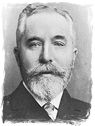
From The Second Advent of the Lord Jesus, with Subsequent Events in Heaven and on Earth by John Ritchie. 3rd ed., enl. Kilmarnock, Scotland: John Ritchie, [1917].