 Jesus Christ is Christianity, for Christianity is primarily and fundamentally
not a creed or set of doctrines but a Person. A Christian is not one
who accepts a certain formula of accepted truth so much as one who
actually accepts the personal Christ as Saviour and Lord. There can
be no Christianity without Christ. "If you take away the name
of Buddha from Buddhism and remove the personal revealer entirely
from his system; if you take away the personality of Mahomet from
Mohammedanism, or the personality of Zoroaster from the religion of
the Parsees, the entire doctrine of these religions would still be
left intact. Their practical value, such as it is, would not be imperiled
or lessened. But take away from Christianity the name and person of
Jesus Christ and what have you left? Nothing! The whole substance
and strength of the Christian faith centers in Jesus Christ. Without
Him there is absolutely nothing" —Sinclair Paterson. "From
beginning to end, in all its various aspects and phases and elements,
the Christian faith and life is determined by the person and the work
of Jesus Christ. It owes its life and character at every point to
Him. Its convictions are convictions about Him. Its hopes are hopes
which He has inspired and which it is for Him to fulfill. Its ideals
are born of His teaching and life. Its strength is the strength of
His spirit" —Denney.
Jesus Christ is Christianity, for Christianity is primarily and fundamentally
not a creed or set of doctrines but a Person. A Christian is not one
who accepts a certain formula of accepted truth so much as one who
actually accepts the personal Christ as Saviour and Lord. There can
be no Christianity without Christ. "If you take away the name
of Buddha from Buddhism and remove the personal revealer entirely
from his system; if you take away the personality of Mahomet from
Mohammedanism, or the personality of Zoroaster from the religion of
the Parsees, the entire doctrine of these religions would still be
left intact. Their practical value, such as it is, would not be imperiled
or lessened. But take away from Christianity the name and person of
Jesus Christ and what have you left? Nothing! The whole substance
and strength of the Christian faith centers in Jesus Christ. Without
Him there is absolutely nothing" —Sinclair Paterson. "From
beginning to end, in all its various aspects and phases and elements,
the Christian faith and life is determined by the person and the work
of Jesus Christ. It owes its life and character at every point to
Him. Its convictions are convictions about Him. Its hopes are hopes
which He has inspired and which it is for Him to fulfill. Its ideals
are born of His teaching and life. Its strength is the strength of
His spirit" —Denney.
The importance of having right views concerning Jesus Christ is very evident, therefore, when viewed from the standpoint of the important place He holds in the religion which bears His name. We cannot be right in the rest unless we think rightly of Him. Names and sects and parties fall, but Jesus Christ is all in all. Our eternal salvation depends upon what we think of Him and what relation we sustain to Him (John 8:21,24; 17:3). Let us therefore seek to understand the things we should know about Him in order to be saved, to walk worthy of Him, and to serve Him acceptably.
Let us consider Jesus Christ from the standpoint of His Person and then of His Work.
The Person of Jesus Christ
The Humanity of Jesus Christ. He was a true man.
"The man Christ Jesus" (1 Timothy 2:5). "Behold
the man!" (John 19:5).
Jesus Christ came into the world as other children do — over the ever thorny way of a woman's pain and sorrow. He was born of the Virgin Mary (Matthew 1:18,23; 2:11; Luke 1:34-35). He was "made of a woman" (Galatians 4:4). In thus being born of a woman Jesus Christ submitted to the conditions of a human life and a human body. He became humanity's son by a human birth. He was named "Jesus" (Matthew 1:21); "Jesus of Nazareth" (Acts 2:22) and Son of man over eighty times. He is "the man Christ Jesus" (1 Timothy 2:5).
Of course there is a great mystery connected with the birth of Christ into this world. The manner of His entrance into the human race was "on this wise" (Matthew 1:18), that is to say, it was different from the long lists of births that are named before it. It was not ordinary, but extraordinary and supernatural. Jesus Christ had no earthly father. Joseph was His "supposed" father (Luke 3:23). The doctrine of the Virgin Birth need not stagger us. We are totally unable to unravel the mystery of our own birth, how much less that of the entrance of Deity into humanity. The story of the supernatural entrance of Christ into the world is in harmony with the supernatural life He lived (John 8:46) and with His miraculous exit from the world (Acts 1:9). No laws of heredity are sufficient to account for His generation. By a creative act God broke through the chain of human generation and brought into the world a supernatural being.
Jesus Christ was subject to the same sinless infirmities as other men. As a child He grew as other children grow (Luke 2:40,46,52). He learned the things of God as other children learn them, by the teaching of his parents, and by His faithful attendance upon the services of the house of God (Luke 2:41,52; 4:16). Just to what extent the sinless nature of Christ and His Deity influenced such growth and progress we may not be able exactly to say, but we do know that Jesus grew, and "increased in wisdom and stature and in favor with God and man." The self-emptying, while not consisting of the emptying of His Deity, yet surely had reference to some voluntary self-limiting which affected His humanity. Is it incredible to think that, although possessing the divine attributes, He should have held them in subjection in order that the Holy Spirit might have His part to play in that truly human and yet perfectly divine life (see Acts 10:38)?
Jesus suffered from hunger and thirst (Matthew 4:2; John 19:28); He was subject to human weariness, and slept (John 4:6; Matthew 8:24). He endured and suffered bodily pain, even unto death, as other human beings (Luke 23; John 19). He "was in all points tempted like as we are, yet without sin." (Hebrews 4:15). Even from the standpoint of His purely human nature he was sinless and He found it impossible to yield to sin. Yet "He himself hath suffered being tempted" (Hebrews 2:18). The "temptation," not only in the wilderness but all through His earthly life (Luke 4:13), was no sham or farce. It was a real temptation, causing the Son of man suffering. It is not he who yields to the temptation who suffers, but he who fights and overcomes. It is remarkable to note this fact.
Jesus Christ had every appearance of a man (John 4:9; Luke 24:13,18; John 20:15). To the woman of Samaria, as well as to Mary Magdalene and the disciples on the way to Emmaus and out on the sea toiling fruitlessly all night, Jesus had all the appearance of a real man. He was "flesh and blood" (Hebrews 2:14), was "made flesh" (John 1:14), possessed a "body" (Matthew 26:12), "soul" (Matthew 26:38) and "spirit" (Luke 23:46); He had "hands and feet" (Luke 24:39).
By His incarnation Jesus Christ came into possession of a real human nature. He came not only unto His own, but came unto them in the likeness of their own flesh. Of course we must carefully distinguish between a human nature and a carnal nature. Christ's human nature was truly human but sinless — "without sin" (Hebrews 4:15). He was a son of man, but also THE Son of man.
What a comfort to us to know that He who was actual God was in reality human, bone of our bone and flesh of our flesh. "Forasmuch then as the children are partakers of flesh and blood, he also himself likewise took part of the same" (Hebrews 2:14). There is not a note in the great organ of our humanity which, when touched, does not find a sympathetic response in the mighty range and scope of the Saviour's being, except, of course, the jarring discord of sin. Are we hungry, thirsty, weary, disappointed, misunderstood, maligned, persecuted, beaten, betrayed? So was He, and in a far deeper sense than we can ever be. We have not yet "resisted unto blood." But He did, and that for our sakes. And it is this very Son of man, this One, who for us men and our salvation became man, who is to be our judge in that great day. How safe will be our interests in His hands! He has been appointed judge "because He is the Son of man," because He fully understands all our trials and temptations, for He himself has "suffered being tempted."
The Deity of Our Lord Jesus Christ
Jesus Christ was not only true man but God also. He was both divine and human; fully man, fully God. In Jesus of Nazareth dwelt "all the fulness of the Godhead bodily" (Colossians 2:9). He was not merely "godlike"; He was actually God. His name was "Immanuel," which means, "God with us" (Matthew 1:23).
The Scriptures assert that Jesus Christ is God.
"The Word was God" (John 1:1). "The great God and our Saviour
Jesus Christ" (Titus 2:13).
Over and over again in the Scriptures the name "God" is ascribed to Christ. "The Word was God." "But unto the Son he saith, Thy throne, O God, is for ever" (Hebrews 1:8). "We know that the Son of God is come ... Jesus Christ. This is the true God" (1 John 5:20) We are aware that it is argued that absolute Deity is not hereby proven, for human judges are called "gods" (John 10:35). True, but such are called "gods" in the relative sense, never in the absolute sense as in the references to Jesus Christ. The word of Thomas, "My Lord, and my God," are not to be considered a mere expression of amazement, but a confession of faith — a confession which Jesus positively accepted as being absolutely true, as His words which follow clearly show.
Other divine names are ascribed to Christ.
He is called "the Son of God." Too numerous to
record here are the scriptures referring to this fact. A few chosen
passages are Matthew 16:16,17; 8:29; 14:33; Mark 1:1; 14:61; Luke
1:35; 4:41. This title was not only claimed for Him by others, but
by Jesus Himself (Matthew 27:40,43: "For he said, I am the Son
of God." See also Mark 14:61-62; Luke 22:70). Without any equivocation
Jesus openly announces Himself as such (John 5:25; 10:36; 11:4). Three
times in the Gospels the Jews attempted to kill Christ, and in each
instance it was because He claimed Deity (John 5:18; 8:59; 19:7).
Indeed it was for just such a claim that they finally slew Him (Matthew
26:62-66).
By the title "Son of God" a unique relation to God was clearly intended: "Therefore the Jews sought the more to kill him, because he not only had broken the sabbath, but said also that God was his Father, making himself equal with God." (John 5:18). The Jews would not stone one of their number simply for claiming that he was a son of God, for every Jew acknowledged that God was his Father. The claim Jesus here made was much more than that; it was unique; it was a claim that no mere human being had a right to make, a claim which in itself constituted blasphemy: "For a good work we stone thee not; but for blasphemy; and because that thou, being a man, makest thyself God" (John 10:33).
It is totally fallacious and altogether contrary to true doctrine to say that Jesus Christ was a son of God in the sense that all men are sons of God, only, of course, that He was much more God-like than any other of the sons of men. Scripture calls Him the "only begotten Son of God (John 1:14,18; 3:16, e. g.). The term "only begotten" means "the only one" (cf. Luke 7:12 — "The only son of his mother"; Luke 9:38 — "For he is mine only child"; Mark 12:6 — "Having yet therefore one son, his wellbeloved"). Note the contrast between the many "sons of God" and "the only begotten Son of God" in John 1:12 and 18. We "become" sons of God by faith in Jesus Christ; Jesus Christ never "became" but always "was" the Son of God. We become children of God in time; He is Son of God from all eternity. He is Son of God by nature; we, by grace and adoption.
Jesus Christ is called "Lord" also (John 20:28; Luke 2:11; Acts 4:33). True, this title is used of the apostles, but it is never used of men with the definite article ("the Lord"). It is remarkable, too, to note that the translators of the Septuagint, when they came to the Hebrew word indicating Jehovah, translated it "Lord" (kurios), which always refers to that ineffable name of the divine Being (Jehovah) which because of their reverence, they were afraid to write and pronounce. When therefore Jesus Christ is called "Lord" it is a clear testimony to the fact that He is Deity, equal with Jehovah.
Such divine names as "the First and the Last" (Revelation 22:13, compared with Isaiah 44:6, where it is the name of Jehovah); "Alpha and Omega" (Revelation 22:13, compared with Revelation 1:8; 4:8, where it is the name of the "Lord God Almighty"); "the Holy One" (Acts 3:14, compared with Isaiah 43:3, and over a score of times in that prophecy, in which Jehovah Himself is called "the Holy One").
Some twelve or more other divine names are ascribed to Christ in the Scriptures, which we have not space here to treat. The names we have dealt with, however, are sufficient to prove that Jesus Christ is Deity, viewed from the standpoint of divine names and titles.
Jesus Christ is to be worshipped even as God is worshipped.
"That all men should honour the Son, even as they honour the Father" (John
5:23). "Let all the angels of God worship him" (Hebrews 1:6).
Robert Browning quoted, in a letter to a lady in her last illness, the words of Charles Lamb, when in a merry fancy with some friends as to how he and they would feel if the greatest of the dead were to appear suddenly in flesh and blood once more — on the first suggestion, and "if Christ entered this room?" changed his tone at once, and stuttered out as his manner was when moved: "You see — if Shakespeare entered we should all rise; if Christ appeared, we must all kneel."
Deity, God alone, is to be worshipped. If then it is proper to render worship to Jesus Christ He must be God. It is not enough to admire Christ; He demands, and the Father demands for Him, the worship of men and angels. God hath "highly exalted him, and given him a name which is above every name: That at the name of Jesus every knee should bow" (Philippians 2:9,10). But such homage would be a sacrilege if Christ were not God. "Thou shalt worship the Lord thy God, and him only" (Matthew 4:10).
Jesus accepted such worship as being properly due Him (John 20:28; Luke 5:8; 24:52; Matthew 8:2). It is worthy of note that the apostles refused such worship (Acts 14:14,15; 10:25,26). Even angels refused to permit men to worship them (Revelation 22:8,9). Who then was Christ, if not God, to unhesitatingly accept the worship of men as His proper due? Jesus Christ was either God, or He was an impostor. But His whole life refutes the idea of imposture. As Stephen (Acts 7:59) and Paul (2 Corinthians 12:8-10) and the early Christians (1 Corinthians 1:2) called upon the Lord Jesus in prayer and worship so should we. Let us not commit the awful sin of refusing to offer to Christ that which is His due (Psalm 2:12).
Attributes which belong to Deity alone are ascribed to Jesus Christ.
He claims pre-existence, and to be the source of all existence. "Before Abraham was, I am" (John 8:58). In addressing the Father He speaks of the glory which He had with Him "before the world was" (John 17:5). He maintained that the Father loved Him "before the foundation of the world" (John 17:24). The Word was "in the beginning with God." The life of all men, whether physical, resurrection of spiritual life, is derived from Christ — He is its source (John 5:21,26; 14:6; 11:25). He is eternal and unchangeable, even as God (Hebrews 13:8 — "Jesus Christ the same yesterday, and to day, and for ever"). Nature, men, things change; He abides the same. "Change and decay in all around I see; O, Thou who changest not, abide with me!"
The creation of all things and their preservation is attributed to Jesus Christ. "All things were made by him; and without him was not anything made that was made" (John 1:3). "In him all things consist," He is the upholder of them all (Colossians 1:17; Hebrews 1:3). The things in the universe do not happen haphazard. Christ governs and controls. Was that why Paul could say, "We know that all things work together for good to them that love God"? He well knew that Christ, his Lord and Saviour, was at the helm of the universe. Nero might well say, "All things conspire against me"; Paul could say, "All things are working for my good."
The forgiveness of sins is an exclusively divine prerogative, yet Jesus claimed the right to forgive the sins of men (Mark 2:5-10; Luke 7:48). No wonder the scribes and Pharisees accused Him of blasphemy in thus assuming to Himself a right that belonged to God alone. Christ not merely declares that sins are forgiven, as a minister might do as representing God; He actually forgives men their sins. He looks upon sin as an act committed against Himself, a fact well illustrated in the parable of the Two Debtors (Luke 7:39-50).
Resurrection and judgment are claimed as the prerogatives of the Son of God. Not the Father, but the Son is to be the judge of all men (John 5:22; Matthew 25:31-46; 2 Timothy 4:1; Acts 17:31). It is at the sound of the voice of the Son of God that the dead come forth out of their graves (John 5:28,29; 6:39,40,54; 11:25,43).
The divine attributes of omnipotence (Matthew 28:18), omniscience (John 16:30; Colossians 2:3), omnipresence (Matthew 18:20; 28:20) are ascribed to Jesus Christ. What power He had in heaven and in earth! Nature (John 2:1-11), disease (Luke 4:38-41), death (John 11:43), demons (Luke 4:35), "all things" (Hebrews 2:8) were under His control. "What a wonderful Saviour is Jesus, my Lord!" What marvelous knowledge he possessed of the inner thoughts (Mark 2:8), plans (John 13:21), and acts of men (Matthew 21:1-3; 16:21)! To Him the great panorama of the ages was as an open book (Matthew 24, 25). Past, present and future were well known to Him. Wherever His people met, there He was in their midst. Distance is no barrier to His personal presence. He fills all things and every place (Ephesians 1:23). "Lo, I am with you alway, even unto the end of the world."
Surely, from the consideration of all these things there should be no room for honest doubt concerning the fact whether Jesus Christ was actually divine or not. No one could possess all these divine prerogatives and not be actually God. My soul, thou hast made no mistake when thou didst lean upon Jesus Christ for thy salvation! No mere human, self-appointed, self-commissioned Redeemer is He. All the power, wisdom and knowledge of the Godhead dwelleth in Him. He upon whom thou didst call for forgiveness and pardon will not leave thee until He has brought thee into His banqueting house and spread His banner of love over thee. He that hath begun the good work, will finish it.
The Redemptive Work of Jesus Christ
God deals with men in this dispensation on the ground of the redemptive work of His Son Jesus Christ. This is the sum and substance of the "New Testament," or, better, "The New Covenant." When Jesus was observing the last supper in the upper room, He said to the disciples, as He handed them the wine to drink, "This cup is the new testament [covenant] in my blood" (Luke 22:20). A covenant is a method of dealing which God sees fit to establish between Himself and His creatures. According to the "New Covenant," then, God has redemptive dealings with men during this age only on the basis of the shed blood of His Son Jesus Christ. How vital then for us, who stand in such great need of the benefits of grace such as pardon, peace, power, sanctification and glorification to understand and appreciate, as fully as we may, the redemptive work of our Lord Jesus.
The Death of Jesus Christ.
"Christ died for our sins" (1 Corinthians 15:3). "Our Lord
Jesus Christ, who gave himself for our sins" (Galatians 1:3,4).
How vital to Christianity is the death of Christ. Other great men have been valued for their lives. Jesus Christ wished to be remembered by His death: "Do this in remembrance of me" were the words He uttered as He passed the communion cup to the disciples. A memorial of His death was His parting gift to them. Christianity is more than ethical; it is redemptive. Indeed, it cannot be ethical unless it is first redemptive. The Cross is the magnet and power of Christian living (Galatians 1:4; 6:14).
Many and various are the views held concerning the death of our Lord and Saviour Jesus Christ. Many, alas! are totally unscriptural and therefore untrue. Let us glance briefly at some of the erroneous views of the death of Christ — modern views of the atonement they are called. Well, perhaps we need to be reminded that "what is new is not true, and what is true is not new."
Christ's death is looked upon by some as an accident, something unforeseen by Christ, and not in the plan of God. But Jesus knew all about it and foretold it long before it happened (Matthew 16:21; Mark 9:30-32). Jesus voluntarily laid down His life; it was not snatched from Him (John 10:17,18). He knew about the plots and plans of His enemies. He well knew, too, that He had come to fulfill the Old Testament scriptures which clearly portrayed His death (Luke 24:27,44; Matthew 26:54).
Others look upon the death of Christ as the death of a martyr, like that of Polycarp, or Savonarola. But neither Jesus nor any of the writers of the New Testament so speak of it. Paul had seen Stephen the martyr die, but he never associated forgiveness of sins with his death. Why, if Jesus died as a martyr, was He seemingly denied the presence of God in His last moments (Matthew 27:46), whereas other martyrs have had their last moments flooded with the sunshine of the divine presence? Can Christ's conduct in the garden of Gethsemane be explained on any other basis than that He was there as the bearer of the world's load of sin, which was crushing out His life? Was He a brave martyr if that is all He was? How does His apparent cringing (Luke 22:39-46) compare with the manifest heroism and bravery of many other martyrs?
Still others look upon Christ's death as being for the purpose of setting forth a great moral example. The sight of such suffering is intended to soften and win human hearts and to lead them to a better life. But does it? Do not men look the suffering Christ in the face and go deliberately sinning? And those who are softened and won by it are thus influenced because they realize that that suffering was for their sin, and that in that death they have life.
It is difficult to see how any so-called governmental theory of Christ's death can satisfy the facts in the case. Surely if God had to make an example of His great wrath against sin, it was hardly necessary that He should vent that wrath on the purest and sweetest man that ever lived. Why bring into the world a supernatural Being, as Christ was, for such a purpose? Were there not enough men already in the world, who were sinful enough to merit just such punishment? Why punish the innocent and not the guilty? Is that a good example of government?
We can readily see that the modern mind fails to find in the death of Christ what the orthodox faith holds as essential to its true nature and purpose. The Scriptures set forth the death of Christ in a fourfold manner:
First, it is considered a ransom: "The Son of man came ... to give his life a ransom for many" (Matthew 20:28). By a ransom is meant the price paid for the buying back of a person or thing. Man had sold himself to sin and Satan. Christ, by His death, paid the price which redeemed man from such thraldom, (1 Peter 1:18-19: "not redeemed with corruptible things, as silver and gold ... but with the precious blood of Christ").
Second, it is a propitiation (Romans 3:25; 1 John 2:2). The lid or covering of the ark of the covenant, which contained the ten commandments, and on which the blood of the sacrificed lamb was sprinkled by the high priest in order to make atonement for the sins against God and His holy law, was called "the mercy seat" or "propitiation." It was the place where God met the interceding high priest and received the blood of atonement by virtue of which He granted pardon to the sinful and sinning nation. So the death of Jesus Christ is the place where, and the ground on which, a holy God can grant pardon to sinful and sinning mankind. There God meets the sinner, and, on the ground of atoning blood, pardons and receives him into favor.
Third, it is looked upon as a reconciliation (Romans 5:10; 2 Corinthians 5:18,19; Colossians 1:20). Sin erected a barrier between God and man; it created an enmity between them. Communion and fellowship between God and man was impossible because of sin, and remained so until some means had been devised to remove sin, which was the ground of the existing enmity (Romans 8:7). Now the death of Jesus Christ is the ground on which and by reason of which such enmity is removed. Calvary removes, or makes possible to faith the removal of, the barrier and the estrangement. God and man are friends by reason of the death of Christ — that is to say, such a friendship by relationship is possible, and actually takes place, when man accepts God's way of atonement.
Fourth, the death of Christ is a substitution (Isaiah 53:4-6; 1 Peter 2:24; 2 Corinthians 5:21). In these passages the actual word "substitution" is not found, but the idea certainly is. It is clearly taught that Jesus Christ, the righteous One, took the place of man, the sinner; that "He, who knew no sin, was made sin for us," in order that we, who had no righteousness, "might be made the righteousness of God in Him." Surely this means that Christ took our place. That is substitution. He gave Himself "for" (and that means "instead of") us and our sins.
Upon a life I did not live;
Upon a death I did not die;
Upon Another's death, Another's life,
I risk my soul eternally.
The necessity for the death of Christ lay in a twofold fact: the holiness of God, and the sin of man. There can be no true understanding of the atonement unless these two related facts are seen in their true light. Light views of either the holiness of God or the exceeding sinfulness of sin will not see much necessity for such a transaction as that which took place at Calvary. God is absolutely holy. No sinner can for a moment stand in His presence, much less abide with Him eternally, so long as sin remains on, with, and in the sinner, and has not in some way been atoned for, punished, and removed. Only thus is it possible for a holy God to be righteous and at the same time pardon the sinner and treat him as though he had not sinned. "Being justified freely by his grace through the redemption that is in Christ Jesus: Whom God set forth to be a propitiation through faith in his blood, to declare his righteousness for the remission of sins that are past, through the forbearance of God; To declare, I say, at this time his righteousness: that he might be just, and the justifier of him which believeth in Jesus." (Romans 3:24-26). The cross of Christ was a practical demonstration or exhibition as to the seriousness with which God views sin. It was by no means a light, trivial thing. It stood as an eternal barrier between God and man. Nothing but the death of Christ could, in the estimation of God, remove that barrier. The absolutely holy nature of God and His righteousness is not now, because of the death of Christ, compromised, even though He does receive the repentant and believing sinner into fellowship with Himself.
Thus the death of Christ as a complete atonement for sin becomes sufficient for the whole world (John 1:29; Isaiah 53:6; 1 John 2:2) and efficient for every one who believes on Jesus (1 Timothy 4:10; Acts 13:38,39). There is not a sinner in the whole world, however "weak," "without strength," "ungodly" (Romans 5:6-8), or "lost" (Luke 19:10) he may be who may not be a partaker of the benefits of Christ's death. Even the "chief of sinners" may find perfect salvation in God's wondrous provision (1 Timothy 1:15,16). Jesus Christ tasted death for every man (Hebrews 2:9) so that every man may say, "He loved me, and gave himself for me" (Galatians 2:20). When this particular phase of the atonement first dawned upon Martin Luther, the great reformer, he was found sobbing beneath a crucifix, and moaning: "Mein Gott! Mein Gott! Fur, Mich! Fur Mich!" ("My God! My God! For me! For me!")
"The wages of sin is death" (Romans 6:23). Christ came into the world in order that through dying He might pay the debt and free man from its awful burden (Hebrews 2:14). Christ was speaking of His death in its relation to the overthrow of Satan's power and kingdom when He said: "Now is the judgment of this world: now shall the prince of this world be cast out. And I, if I be lifted up from the earth, will draw all men unto me. This he said, signifying what death he should die" (John 12:31-33). The sin question is no longer an unsettled question. Jesus Christ settled it once and for all on the Cross. That God was satisfied with that settlement of the sin question is evident from the fact that He raised Christ from the dead, and exalted Him to His own right hand (Philippians 2:5-10; John 16:10; Acts 2:30-33). The paramount question confronting man today is the Christ question: "What think ye of Christ?" "What shall I then do with Jesus, which is called Christ?" The issues of eternity are determined by man's answer to and attitude towards that question (John 8:21,24). "For judgment I am come into the world" (John 9:39).
The Resurrection of Jesus Christ.
"But now is Christ risen from the dead" (1 Corinthians 15:20). "Who
... was raised again for our justification" (Romans 4:25).
The resurrection of Jesus Christ from the dead "the third day according to the Scriptures" (1 Corinthians 15:4) had a most vital relation to His redemptive death. Had the body of Christ remained in the tomb beyond the divinely appointed time of three days and three nights; had the physical form of Jesus been permitted to "see corruption" (Acts 2:31); had it remained in that tomb in Joseph's garden until the "resurrection at the last day" (John 11:24) — then, we would have had no proof that the Father was pleased with the sacrifice which the Son had made upon the cross, nor would we have had the assurance of pardon and forgiveness through the redemptive work of Jesus Christ. The raising of Jesus from the dead was the seal of the Father's approval on the work of His Son in connection with the offering of His life as an atonement for sin. The resurrection was the Father's "Amen!" to the Son's "It is finished!"
The resurrection of Jesus Christ from the dead "declared" Him to be, set Him apart from all the other sons of men as, "the Son of God" (Romans 1:4). It did not "make" but "declared" him to be, the Son of God.
Again and again in His ministry Christ was challenged as to His authority for His acts and teachings. He appealed to His resurrection as proof of His claims to Deity and as sufficient guarantee as to the authority of His teachings (See Matthew 12:38-42; John 2:13-22). It was impossible that such an One as Jesus, spotless and sinless as He was, laying claims to divine prerogatives as He did, and appealing again and again as He did to His resurrection from the death as proof of the truth of it all — it was impossible that God should allow Him to have remained in the grave. To have done so would have been to give the lie to all the claims of His Son, and to leave the world in doubt as to any saving efficacy which might have attached itself to His death on the cross. "Whom God hath raised up, having loosed the pains of death: because it was not possible that he should be holden of it" (Acts 2:24). He "was delivered for our offences, and was raised again for our justification" (Romans 4:25). The believer in Christ may rest perfectly assured that all his sins which were laid on Jesus are entirely removed, pardoned, and forgiven. God was perfectly satisfied with the sacrifice for our sins which His Son made. The empty tomb in Joseph's garden on that first Easter morn proclaimed to us the comforting news of pardon and justification. He that believeth on the Son is justified from all things (Acts 10:43; 13:38,39).
The resurrection of Jesus Christ gives to the believer an interceding High-Priest in heaven (1 John 2:2; Hebrews 4:15; 7:25,26; Romans 8:34). Immediately after His ascension Christ took His place at the right hand of the Father there to intercede for the believer. Satan is the "accuser of the brethren" (Revelation 12:10; Zechariah 3:1-3), and whenever a child of God sins Satan stands there in the presence of God (Job 2 and 3) ready to accuse him and to demand the execution of the sentence against sin. It is then that our Saviour pleads for us by virtue of the nail scarred hands and feet and spear-thrust side. Jesus pleads His death and the Father's acceptance of such by raising Him from the dead as the ground for pardon and remittance of penalty for sins committed by those who have put their faith in Him. Our temporary falls after we have accepted Jesus as our Saviour do not mar our relationship with God the Father. "We have an Advocate with the Father, Jesus Christ the righteous" (1 John 2:1)." His plea for us never fails (John 11:42: "I knew that thou hearest me always").
"The right hand of God" is the place of power. To that place Christ has been exalted by the Father (Ephesians 1:19-22: "The exceeding greatness of his power ... which he wrought in Christ, when he raised him from the dead, and set him at his own right hand in the heavenly places, far above all principality, and power, and might ... and gave him to be the head over all things to the church").
All the power of the universe is in the hands of the Saviour, and it is there at and for the disposal of the believer; it is "power to us-ward who believe." No sin in the life is beyond His power to conquer, no weakness that cannot be offset by His strength, no failure that need not have been victory in His might, no virtue unattainable when He is looked to for power to realize it, no great difficulty that cannot be met by the exceeding greatness of His power, no scheme of Satan or wile of demon can prevail if we look to Him to whom all principalities and powers are subject. O believer in Christ, look to the risen, ascended and glorified Christ, and nothing shall be impossible to you! "All power is given to me in heaven and in earth" (Matthew 28:18).
There is one comforting thought which should not be overlooked in connection with the resurrection of our Lord Jesus from the dead, and that is the fact that our own resurrection from the dead is absolutely guaranteed by His: "Because I live, ye shall live also" (John 14:19). "For if we believe that Jesus died and rose again, even so them also which sleep in Jesus will God bring with him" (1 Thessalonians 4:14). As empty as was the tomb in Joseph's garden on that first Easter morn of our age twenty centuries ago will be every believer's grave in that morn when the trumpet shall sound and the dead in Christ shall rise triumphant over death and the grave to enjoy immortality and eternal bliss. Of course the wicked too are raised from the dead at the sound of His voice, but their resurrection is to eternal death, not to life everlasting. (John 5:24-29). What a glorious hope! Think of all that is wrapped up in those blessed words: "Because I live, ye shall live also!" It means not only the raising and glorifying of our own bodies, but also those of our loved ones whom "we have loved long since and lost awhile." What a meeting that will be! What a gathering of the saints from the north, south, east and west, to sit down with the loved ones in the kingdom of the Father!
But there is a sad aspect of the resurrection of Jesus Christ, which pertains to the wicked and unbelieving. The resurrection of Christ is a proof positive and sufficient to all men as to the certainty of a coming judgment day. "Because he hath appointed a day, in the which he will judge the world in righteousness by that man whom he hath ordained; whereof he hath given assurance (literally "faith" or "proof") unto all men, in that he hath raised him from the dead" (Acts 17:31). Some day the wicked and unbelieving, those who have refused to believe in Christ even in the face of overwhelming proof of the truth of His claims — as evidenced by His resurrection from the dead — will have to stand before God and answer for such unbelief in the face of such convicting and convincing evidence (cf. John 16:7-10).
The Coming Again Of our Lord Jesus Christ.
"This same Jesus, which is taken up from you into heaven, shall so come
in like manner as ye have seen him go into heaven" (Acts 1:11).
The importance of a right understanding of this doctrine can hardly be overestimated. It has been said that where the first coming of Christ is mentioned once in the Scriptures, His second coming is mentioned eight times. One out of every twenty-five verses in the New Testament is said to be devoted to its teaching. Three hundred and eighteen references to it are found in the 216 chapters. The prophets of the Old Testament (1 Peter 1:11), angels (Acts 1:11), Jesus Himself (John 14:3; Matthew 24, 25), as well as the apostles of the Lord Jesus (Acts 3:19,20; 1 Thessalonians 4:14-18; Hebrews 9:28, etc.) — all bear witness to the great doctrine of the coming again to this world of Jesus Christ. Such a hope is set forth as a great incentive to Christian living (1 John 3:3; Luke 21:34-36), as the outward and forward look of hope for the Church of Christ (Titus 2:13), and as the greatest solace of the believer during his earthly career (1 Thessalonians 4:14-18). Just why the doctrine of our Lord's coming again should not be proclaimed more than it is surpasses the comprehension of the thorough Bible student who sees this grand and glorious doctrine on almost every page of his Bible. Watching, working, waiting for the coming of our great God and Saviour Jesus Christ ought to be the characteristic pose of every believer.
When we speak of the coming again of our Lord we mean His personal, visible, bodily coming again to this earth (Acts 1:11), not in humiliation as at the first advent (Philippians 2:5-8), to suffer and to die for the sins of mankind (Hebrews 2:14; 1 John 3:5), but to reign in glory, and to take to himself the kingdoms of this world. "So Christ was once offered to bear the sins of many; and unto them that look for him shall he appear the second time without sin unto salvation" (Hebrews 9:28).
Pentecost may be looked upon as a but surely not the coming again of Christ. Nor was the destruction of Jerusalem, closely resembling the second coming as it did in so many points, the fulfillment of that predicted event. Nor yet are we to look upon death itself as the coming of Christ, for in death the believer goes to be with Christ rather than that Christ comes for him. One has but to note particularly the events that, in Scripture, are associated with the coming again of Christ, such as the raising of the righteous dead and the changing of the bodies of the righteous living, etc., to be convinced that no such things occurred at Pentecost or the destruction of Jerusalem, nor do they occur at the death of the believer. The coming again of Jesus Christ is an event predicted in the Scriptures which is still future, and for the fulfillment of which, with longing and anxious hearts, we still look.
Just when this great event shall take place no one knows. No man knows either the day or the hour (Matthew 24:36-42; Acts 1:7). Those who would set a specific date for the coming of our Lord thereby discredit themselves as reliable expositors of the Word of God. "It is not for you to know the times or the seasons, which the Father hath put in his own power" (Acts 1:7). "But of that day and hour knoweth no man, no, not the angels of heaven" (Matthew 24:36), neither the Son, but the Father. In the face of such statements of Scripture as these, how dare any man set a date for our Lord's coming? "In such an hour as ye think not the Son of man cometh" (Matthew 24:44).
Of course it is possible for us to know that it is imminent. The Master Himself gave certain signs which betokened the near approach of His coming (Matthew 24:36-42, compare also I Thessalonians 5:1-5). We should remember also in this connection that at least two great events comprise the coming again of our Lord: His coming for the saints (1 Thessalonians 4:14-17; 1 Corinthians 15:50-53), and His coming with them (Jude 14,15, cf. Revelation 19:11-16). His coming for the saints is an event which may take place at any moment. Certain specific events must take place before the coming with the saints — such events as the seventieth week, the great tribulation (Daniel 9:25-27; Matthew 24:29).
We are not left in ignorance as to what Christ is going to do when He comes again. We may not know everything about it, but we know some things.
First, He is going to raise the righteous dead. "For the Lord himself shall descend from heaven with a shout, with the voice of the archangel, and with the trump of God: and the dead in Christ shall rise first" (1 Thessalonians 4:16). Here is a clear statement as to what Christ will do first: He will raise the righteous dead; not all the dead; "the rest of the dead lived not again until the thousand years were finished" (Revelation 20:5, Cf. 1 Corinthians 15:23,24). When Jesus comes again every grave of every believer will be empty. Like Lazarus they shall hear His voice and come forth. Believers rest in hope. We shall sleep but not forever; there shall be a glorious dawn. The body of that loved one whose eyes you may have closed in death, will awaken in that morn and see the King in His beauty in the land that is not far off. What a wonderful sight that will be to see graves, tombs, mausoleums overturned, and the dead in Christ coming forth triumphant over death!
Second, Christ will change the bodies of the righteous living when He comes again. We shall not all sleep (die), but we must "all be changed." "Flesh and blood cannot inherit the kingdom of God." These bodies of our humiliation are to be transformed into the likeness of the body of His glory (Philippians 3:21). No more sickness, no more bodies racked with pain, no more need of spectacles or crutches, no more physical infirmity, no more longing for the coming of the morn because of pain almost unbearable. All that will be changed in a moment, in the twinkling of an eye (1 Corinthians 15:51).
Soon will our Saviour from heaven appear;
Sweet is the hope and its power to cheer;
All will be changed by a glimpse of His face;
This is the goal at the end of our race.
Third, the saints will receive their reward when the Lord comes. Then will be set up the judgment seat of Christ: "For we must all appear before the judgment seat of Christ; that every one may receive the things done in his body, according to that he hath done whether it be good or bad" (2 Corinthians 5:10). This judgment will have reference to the works, not to the salvation of the believer. The moment a man believes in Christ the matter of his eternal salvation is settled once for all (John 5:24). It is never again brought into question. But the place he will have in the life to come will depend upon his faithfulness. Whether he shall be over three, or five, or ten cities will depend upon the use he has made of the gifts and talents God has entrusted to him. The "judgment seat of Christ," then, is not a judgment regarding destiny, but for adjustment, for reward or loss according to works, for position in the new sphere of life. That the saints are those referred to as appearing in this judgment is clear from verses 2 Corinthians 5:1,5,7,9, and the First Epistle, 4:5, where it is said that those who are thus judged "shall have praise of God."
Not always is the believer rewarded in this life for all the good he does. "Light is sown for the righteous"; it will bring forth its fulness of fruition in the life to come. That is a comforting thought for the believer. Ofttimes when we do a bit of good for God we are misunderstood, our motives are impugned, we are accused of selfishness and a host of other things. What a comfort to know that some day our blessed Lord will say, "Well done," and reward us for every bit of good we have done in His name and for His sake!
Fourth, He is coming to deal again with the Jew. For many centuries the Jew has been cast off and the Gentiles seem to have entered into his inheritance. But "the times of the Gentiles" will not last forever. The chosen people of God will again come into their own. God hath not cast off His people for ever (Romans 11:1,25-32). The Jews will be restored to their own land (Isaiah 11:11;60), probably in an unconverted state; they are likely to rebuild the temple and restore worship (Ezekiel 40-48). They will enter into a covenant with the antichrist, which will be broken and as a result they will pass through the great tribulation (Daniel 9:27; Matthew 24:21,22,29; Revelation 7:14, cf. 3:10). Finally, as a nation, they will turn to their Messiah, and become great missionaries (Zechariah 12:10; 8:13-23).
Fifth, Christ is coming again to set up His millennial reign on the earth (Revelation 20:1-4). During this period Christ Himself is King (Jeremiah 23:5; Luke 1:30-33). Jerusalem will doubtless be the capital city (Isaiah 2:1,2), to which pilgrims will wend their way (Zechariah 14:16). It is likely that the apostles will reign over the Jew, the Church over the Gentiles (Isaiah 66; Matthew 19:28). Sin will then be as scarce as righteousness is now, and righteousness will then be as prevalent as sin is now. The reign of Christ will be one of equity and righteousness (Isaiah 11:4; Psalm 9:19). Among the events following the Millennium are apostasy and rebellion (Revelation 20:7-9), the destruction of Satan (20:10), the great White Throne judgment (20:11,15), and the new heavens and the new earth (21 and 22).
The five events here set forth by no means comprise every event connected with Christ's coming again to this earth. They are among the principal events of that time, and probably of deepest interest to us.
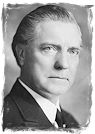
From What Every Christian Should Believe by William Evans. Chicago: Moody Press, ©1922. Photo courtesy of Moody Bible Institute Archive.